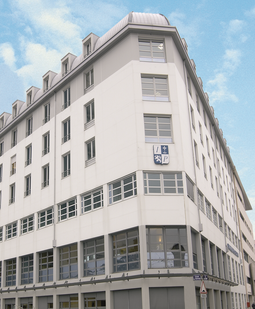
CHP Saint-Grégoire (Saint Gregory Private Hospital), the first Breton hospital in France specializing in Surgery, was established in 2004 when three medical facilities -- Saint Vincent Clinic, Volney Polyclinic, Bréquigny Maternity -- merged into a single site.
What is Catheter Ablation?
Catheter ablation is a treatment procedure performed to treat some kinds of arrhythmia, in which there are problems related to the heartbeat rhythm.
How is Catheter Ablation Performed?
An ablation catheter, which is a thin, long and flexible tube, is inserted into a blood vessel in the arm, groin or neck.
The catheter is guided into the heart thought the blood vessel.
Radiofrequency (RF) energy is sent from a special machine through the ablation catheter into the heart.
Tissues of the heart where abnormal heartbeats occur are destroyed by the energy.
How to Prepare for Catheter Ablation?
A comprehensive electrophysiologic study (EPS) needs to be done before a catheter ablation procedure.
Various tests including chest X-ray, ECG and blood tests need to be conducted before the procedure.
Some medications need to be stopped a few days before the procedure.
Sedative medication will be given through an intravenous line.
About Cardiac Ablations
Key facts to plan your treatment: how long it takes, your hospital stay, anaesthesia, risks and recovery.
Duration of surgery/treatment
4 to 8 hours
Days admitted
Overnight, if there are no complications.
Anesthesia
Local anesthesia
Recovery
- The patient needs to stay in bed for 1 to 6 hours after the procedure.
- The patient is monitored using a telemetry monitor to observe the heart rate and rhythm.
- There may be chest discomfort and feelings of fatigue for about 2 days after the procedure.
- The patient should follow the doctor’s instructions carefully.
- If there is prolonged chest discomfort, the doctor should be informed immediately.
- Anti-arrhythmic medication needs to be taken after the procedure.
- The patient should not drive for a few days after the procedure.

 Private Hospital