Key planning information for acl reconstruction in Germany.
$4,400 fromLowest listed price
3 hrsProcedure time
3 hospitalsList acl reconstruction
ACL Reconstruction in Germany is listed from US$4,400 to US$6,600 at 3 hospitals. The operation takes 3 hours. Each hospital quotes its own price for your case.
Prices last updated Feb 2012
Cost of ACL Reconstruction in Germany
Table of prices by type of procedure, in US$. Each hospital quotes its own price for your case.
Procedure
Minimum price
Maximum price
ACL Reconstruction
$4,400
$6,600
Price starting from $4,400 up to $6,600 · last updated Feb 2012.Final prices are quoted by each hospital
Hospitals and clinics offering ACL Reconstruction in Germany
ACL Reconstruction is listed by 3 hospitals in Germany. The order reshuffles every hour so each gets equal exposure.
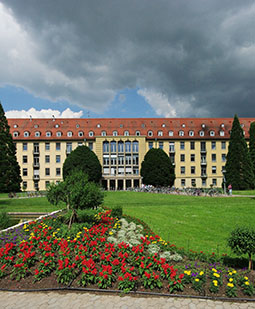
The University Medical Center Freiburg is one of the largest medical facilities in Europe and part of the Albert Ludwigs University Freiburg, one of five outstanding centers of academic excellency in Germany.
DoctorsNSProf. Norbert SüdkampPSProf. Peter StrohmView all 5
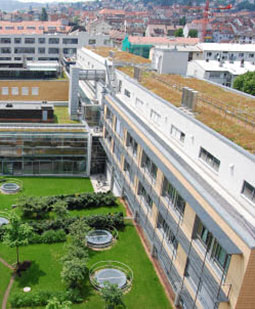
One of Germany's largest hospitals, made up of more than 50 clinics and specialist institutes spanning all medical specialties. Kinikum Stuttgart is regarded as one of the best hospitals in Germany, and is a referral center for oncology, ENT, pediatrics and more.
DoctorsCKProf. Christian KnopTWProf. Thomas WirthView all 17
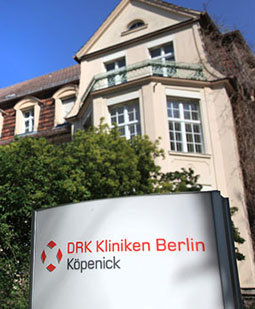
The DRK Kliniken Berlin is a chain of five JCI accredited tertiary care hospitals in Berlin. The international department is experienced in handling foreign patients and can assist with all necessary arrangements.
What is Anterior Cruciate Ligament Reconstruction?
Anterior cruciate ligament reconstruction (ACL reconstruction) is a surgical procedure that replaces the central ligament of the knee with a new ligament graft.
The ligament graft can be an autograft in which a part of the patient’s body such as a knee tendon or hamstring is used as the graft. Alternatively it could be an allograft in which the graft is from an external donor.
The patient is required to stick to a rehabilitation program of two to six months after an anterior cruciate ligament reconstruction to successfully recover and resume full activities.
How is ACL Reconstruction Performed?
The surgery is performed by an arthroscopy.
During arthroscopy a small incision is made on the knee through which an arthroscope with a camera attached to it is inserted into the knee.
Other tiny incisions are made on the knee through which surgical instruments are inserted.
The old anterior cruciate ligament is removed.
If an autograft is used, a larger incision is made to remove this ligament.
Tunnels are made into the bone to place the new tissue at the site of the old anterior cruciate ligament.
Screws may be used to attach the new ligament to the bone.
It also helps the ligament to be held firmly in its place.
Once the surgery is complete, the incisions are closed with stitches and dressing is applied.
How to Prepare for the Surgery?
The doctor should be informed about any medication that the patient may be taking.
Certain medication that the patient has been taking may be stopped two weeks before the surgery.
The doctor should be informed about any medical conditions or ailments of the patient.
The doctor should be informed if the patient has been drinking more than one or two drinks of alcohol in a day.
The patient should stop smoking some weeks prior to the surgery to recover quickly.
About ACL Reconstruction
Key facts to plan your treatment: how long it takes, your hospital stay, anaesthesia, risks and recovery.
Duration of surgery/treatment
Approximately 3 hours
Days admitted
ACL reconstruction by arthroscopy is usually done as an outpatient procedure.
Anesthesia
General Anesthesia or Spinal Anesthesia
Recovery
- The patient may need to wear a knee brace for up to four weeks after the surgery.
- Crutches should be used to help the patient move around.
- The patient can move the knee that will prevent stiffness.
- Medication may be prescribed to reduce pain.
- A complete recovery to full activities may take 4 to 6 months.
Risks
- Knee stiffness
- Ligament healing failure
- Knee weakness
- Blood clotting in the leg
- Injury to the nerves and blood vessels
- Loosening or stretching of the graft ligament
- Repeat injury to the graft ligament
- Knee pain
- Infection
- Bleeding
- Risks of anesthesia that include breathing problems and allergic reaction to medication
After care
- The patient is required to take physical therapy for 2 to 6 months to regain strength and motions of the knees.
- The incision area should be kept clean and dry.
- Any signs of infection should be reported to the doctor.
- The doctor’s instructions should be followed carefully.
 University Hospital
 ISO
 JCI