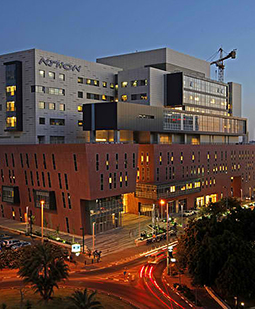
 Private Hospital
Tel Aviv, Israel
 JCIPrice on request
The new Assuta Hospital was opened in 2009, and claims to be the most modern hospital in the middle east.
Degenerative and Inflammatory Artery Disease is treated at
Price
Contact for quote
Vascular Surgery care in Israel
Hospitals, clinics and medical centers in Israel treating Degenerative and Inflammatory Artery Disease.

Key planning information for degenerative and inflammatory artery disease in Israel.
Degenerative and Inflammatory Artery Disease in Israel is priced per case at 4 hospitals. Each hospital quotes its own price for your case.
Degenerative and Inflammatory Artery Disease is listed by 4 hospitals in Israel. The order reshuffles every hour so each gets equal exposure.
Private HospitalJCIPrice on requestThe new Assuta Hospital was opened in 2009, and claims to be the most modern hospital in the middle east.
Degenerative and Inflammatory Artery Disease is treated at
 Public University HospitalJCIPrice on request
The Department of Vascular Surgery and Transplantation at Rambam Health Care Campus is committed to excellence in serving all patients requiring diagnosis and treatment of vascular diseases—including chronic and severe cases, and vascular trauma.
Degenerative and Inflammatory Artery Disease is treated at
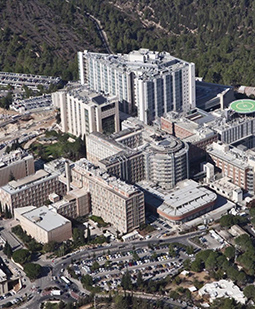 University Hospital
Hadassah medical institution includes two university hospitals in Jerusalem – on Mt. Scopus and in Ein Kerem. Both provide advanced tetriary healthcare services in all medical specialties.
Degenerative and Inflammatory Artery Disease is treated at
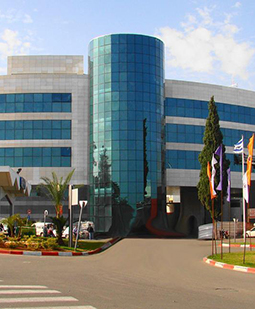 Public Hospital
 ISOPrice on request
One of the largest hospitals in Israel with 900 beds and 700 physicians. The hospital serves 1000 medical tourists annually, providing advanced medical care at the highest western standards.
Degenerative and Inflammatory Artery Disease is treated at
Degenerative and inflammatory artery disease
Degenerative and inflammatory artery diseases may be congenital or acquired.
Berry aneurysm
It is caused by focal weakness of the blood vessels walls. This may lead to subarachnoidal hemorrhage which may be fatal.
Arterio-venous fistula
It is the abnormal communication between the artery and vein. It may lead to left to right shunt with increased venous return. Fistulas may lead to heart failure and fatal hemorrhage.
Arteriosclerosis
This is a progressive disease of the arteries. It is characterized by a loss of elasticity and thickening of the arterial walls. It is caused by lipid deposition, synthesis of extracellular matrix and smooth muscle proliferation. It involves medium to large muscular arteries especially the aorta.
Arteriolosclerosis
It affects the smaller arteries, arterioles, and capillaries. It occurs in two variations which are hyaline arteriosclerosis and hyperplastic arteriosclerosis.
Aneurysms
These are abnormal focal dilation of the veins and arteries. They develop whenever the walls of the blood vessels weaken. The most common causes are atherosclerosis and cystic radionecrosis. Other causes include syphilis, trauma, and intercranial arteries.
Polyarteriitis nodosa
This disease is characterized by necrotizing inflammation of the arteries throughout the body. In the early stages fibrinoid necrosis and heavy infiltration in the vessels. In the acute phase, vasculitis occurs and it is characterized by transmural inflammation. The lumen becomes thrombosed resulting in acute tissue ischemia. In the later stage, there is a proliferation of the nodular fibroblast and irregular aneurysm dilation of the blood vessels.
Wegener's granulomatosis
This is characterized by necrotizing glomerulonephritis, necrotizing granulomas of the upper respiratory tract and necrotizing or granulomatous vasculitis of small arteries and veins most commonly in the lungs. Diagnosis involves a biopsy of the upper respiratory tract lesions
Thrombangiitis obliterans (buerger’s disease)
This is a chronic inflammatory vascular disease which is characterized by acute and chronic vasculitis of the small and medium-sized arteries which is followed by thrombosis of the vessels affected. If the arteries of the lower extremities are affected it may lead to gangrene. Symptoms include colour and temperature changes of in the lower limbs, claudications, gangrene chronic ulcerations of the fingers toes and feet and severe pain even at rest.
Raynaud's disease
It is caused by intense spasms of the small arteries and arterioles and is characterized by cyanosis of acral parts or paroxysmal pallor.
Leukoclastic angiitis
It involves small vessels and is characterized by rich lekocytic infiltration and fibrinoid necrosis.
Risk factors
Symptoms include:
Treatment
Treatment of degenerative and inflammatory artery disease involves the administration of medication such as hypertensive drugs anti-inflammatory drugs.
In severe cases, the affected part is replaced with a graft.
Key facts to plan your treatment: how long it takes, your hospital stay, anaesthesia, risks and recovery.
Common questions
Have a question? Get a free consultation.
Choose a hospital and send your enquiry to its international patient team. Each replies with its own price and plan.
Free consultation • No obligation