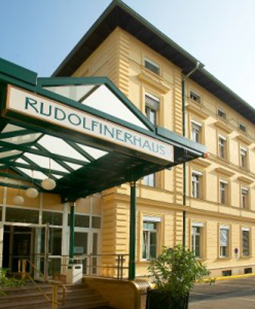
The largest private hospital in Vienna, offering quality medical services in an atmosphere of a luxury hotel. Rudolfinerhaus is affiliated with thousands of doctors, and patients can choose their doctors, or even bring their own physicians.
DoctorsFGProf. Florian Gottsauner-WolfROProf. Roland OppolzerView all 22
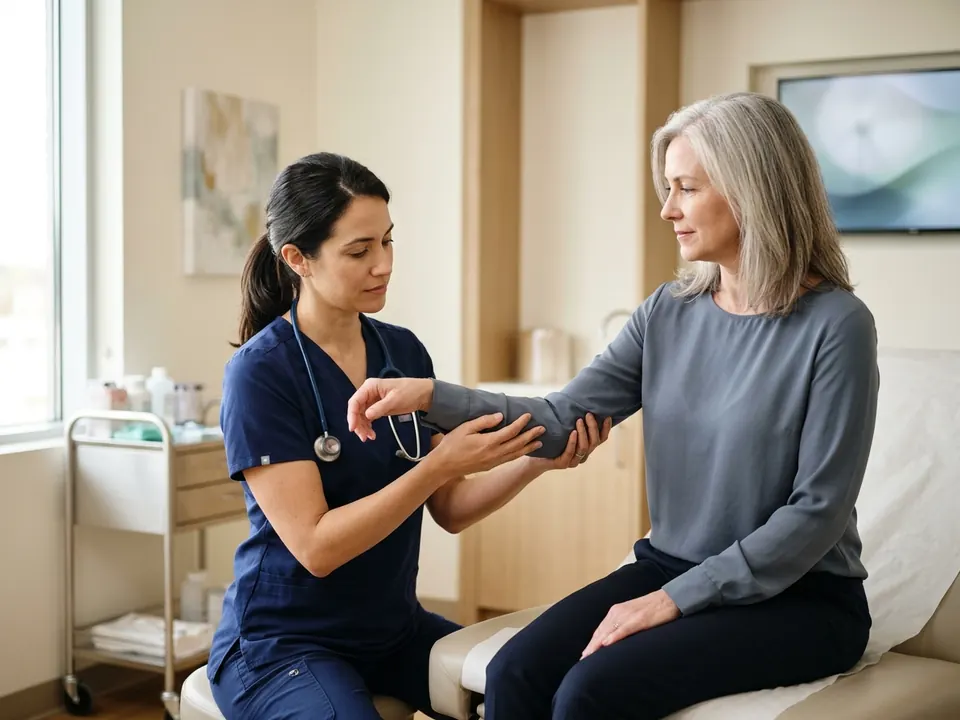
The elbow joint is made of ligaments that can sometimes be injured. If this happens, one requires surgery to repair any injury that may have arisen. The main causes of injuries to the elbow is usually overuse, old age and some unknown reasons. It will normally have ramifications such as excruciating pain and inability to move the elbow.
The Diagnosis Procedure
The diagnosis of the elbow is usually done through modern technology. You may have already heard of arthroscopy of the knee but unaware that it can be performed on the elbow as well. The doctor makes a small incision in the elbow and inserts a camera. The image is magnified many times over.This allows him or her to determine if the elbow is badly injured and requires surgery. The procedure itself is conducted on an outpatient basis. That means a stay at the hospital overnight is not necessary.
Other tests:
An X-ray test may be recommended by the diagnosing doctor to assist his or her conclusion.
An MRI scan of the neck may be recommended. Sometimes arthritis of the desk and herniated disks can cause arm pain.
An EMG may also be performed. This will eliminate the likelihood of nerve compression being responsible for nerve pain
Surgical Treatment
The surgery may be either open or non-intrusive. This will entail making a cut over the elbow to perform repairs. At times, arthroscopic surgery is performed. It entails inserting instruments through a tiny incision in the elbow. The type of procedure will depend on the type of injury the elbow has suffered.
About Elbow Surgery
Key facts to plan your treatment: how long it takes, your hospital stay, anaesthesia, risks and recovery.
Days admitted
The elbow surgery usually takes place on an outpatient basis. All patients who report for this surgery should be able to leave the hospital the same day. In very rare instances will one ever be required to stay overnight for examination.
Recovery
Almost 90% of people return to full strength after the surgery. In rare cases, people may see a minimal loss of strength in the use of their arm. The loss will depend on the extent of the injury.
Risks
The risks associated with this surgery are very few. They are the expected risks associated with any surgery: one may require further surgery, the risk of getting infected, losing mobility in the arm, weakened arm, the risk of vessel and nerve damage
After care
After the surgery, a splint will be placed on the arm to prevent any movement. This splint is taken off after a week or ten days. When it is removed, one will be advised to engage the arm is some light exercises.
This is in a bid to restore the arm to its former state as soon as possible. The doctor may also require one to come in for an examination to ensure the arm healed properly. Unless one complains of any problems, no scans or tests are required.
For people who are engaged in athletic activity, the doctor will give a recommendation on when one can return to his/her favorite sport. This will usually be four or six months after the surgery. However, the doctor is tasked with making the final recommendation.
 Private Hospital
 ISOPrice on request