Moscow Next Generation Clinic is an IVF and fertility treatment center in Moscow, Russia. Being one of the leading IVF centers in Moscow, we provide all services in the field of reproductive medicine. We carry out treatment of female and male infertility, genetics, andrology. Our donor cryobank is o
DoctorsLKDr. Liya Kazaryan, MDOLDr. Oksana Loboda, MDView all 9
What is intracytoplasmic morphologically selected sperm injection (IMSI)?
IMSI is a laboratory technique which is used in IVF treatments. It involves inserting sperm into the egg.
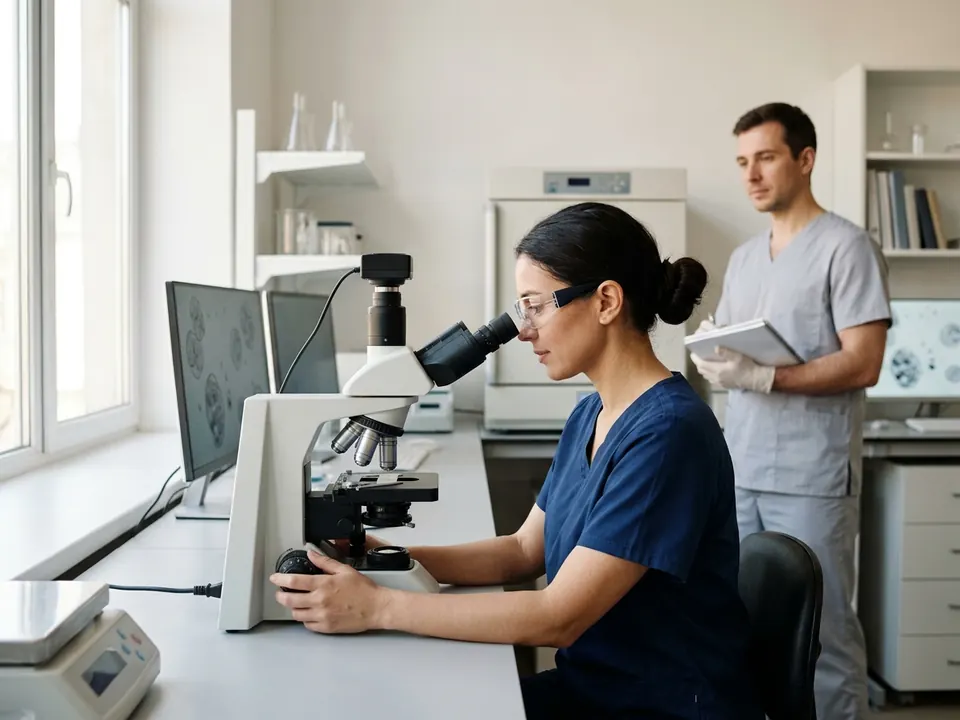
IMSI is a variation of intracytoplasmic sperm injection (ICSI) which uses a high-powered microscope (enhanced by digital imaging) to select sperm before microinjection takes place. This magnifies the sperm over 6000 times. The morphology (shape) of the sperm is crucial in diagnosing male fertility problems and in predicting pregnancy and fertilization outcomes.
Who carries out IMSI?
IMSI is carried out by experienced embryologists specially trained in the technique. The use of IMSI is limited due to the resources needed to carry it out. The procedure takes a minimum of one hour and often takes several hours. Special equipment is needed for the procedure to reach the necessary magnification.
Why IMSI?
It allows embryologists to look at the sperm in greater detail including the nucleus which contains the sperm’s genetic material. The embryologist is thus able to detect even the most subtle alterations in sperm that a normal microscope cannot detect. Sperm are then selected that have the most normally shaped nuclei. Being able to select the best possible sperm is believed to increase the chances of a successful implantation.
Is IMSI for me?
IMSI may be a good option for you if you have:
No sperm in your semen
A low sperm count
Low sperm motility (slow sperm)
Abnormally shaped sperm
Damaged or missing vas deferens
Had a vasectomy
Tried IVF unsuccessfully
What's the treatment for ICSI?
The timeline for ICSI treatment is usually as follows:
Sperm collection: You provide a semen sample and an embryologist obtains a sperm from the sample.
Microsurgery: This is only done if needed. It is done when there is little or no sperm in the sample collected or you cannot ejaculate. This is done under local anesthesia and recovery is not painful.
Tissue sample: This is also only done if needed. If microsurgery does not work, the doctor takes a tissue sample from inside your testicle.
Gathering the eggs: When IVF treatment starts, your partner receives injections to stimulate her ovaries to develop multiple mature eggs for fertilization. You partner is given anesthetic and then an ultrasound probe is inserted into her vagina to observe the ovaries and identify follicles where eggs develop and mature. The doctor then retrieves 8-15 eggs.
Fertilization: The doctor injects the sperm directly into each of our partner’s eggs. Three days later, each successfully fertilized egg becomes an embryo.
Transferring the embryos: Depending on your partner’s relevant factors, the doctor inserts 1-5 embryos in her uterus using a thin catheter.
Growing a baby: If the treatment is successful, an embryo implants in your partner’s uterine wall and grows into a baby. Extra embryos may be frozen for future use.
Testing for pregnancy: our partner takes a pregnancy test after the embryos are placed in her uterus.
Advantages of IMSI
Helps men with infertility
Boosts the chance of fertilization
May help when frozen eggs are used
Disadvantages of IMSI
It is costly and time-consuming
A genetic disorder can be passed on to a child
Potential complications for a baby
Risk of multiples
About IMSI
Key facts to plan your treatment: how long it takes, your hospital stay, anaesthesia, risks and recovery.
Recovery
Information coming soon. Request a consultation for personalized recovery guidance. Get Quote →
After care
Information coming soon. Request a consultation for personalized recovery guidance. Get Quote →
 Fertility Clinic