This is a medical condition in which fatty deposits (atheroma) build up in the arteries restricting blood supply to the leg muscles. It is also called peripheral vascular disease. The disease is a likely sign of atherosclerosis which reduces blood flow to the heart and brain as well as the legs.
Who is affected
Factors that increase the chances of developing PAD include:
Smoking
Diabetes
High blood pressure
High cholesterol
People over the age of 50
Male gender
Obesity
Family history of heart disease or stroke
High levels of homocysteine
Signs and symptoms
Intermittent claudication: pain in leg muscles when walking which resolves with rest
Skin ulcers
Bluish skin
Cold skin
Poor nail and hair growth
Critical limb ischemia
Recurring leg pain when exercising
Weak or no pulse in your feet
Erectile dysfunction
Shiny skin on your feet and legs
Diagnosis
Ankle-brachial index: In this test, the blood pressure in the arms and ankles is measured. If the blood pressure readings in the ankles are lower than in the arms, peripheral artery disease is suspected. The test may also be done while exercising usually on a treadmill until the pain in the legs occurs.
Blood tests: This test requires a sample of your blood to be drawn. It is used to measure your triglycerides and cholesterol. It is also used to check for diseases such as diabetes.
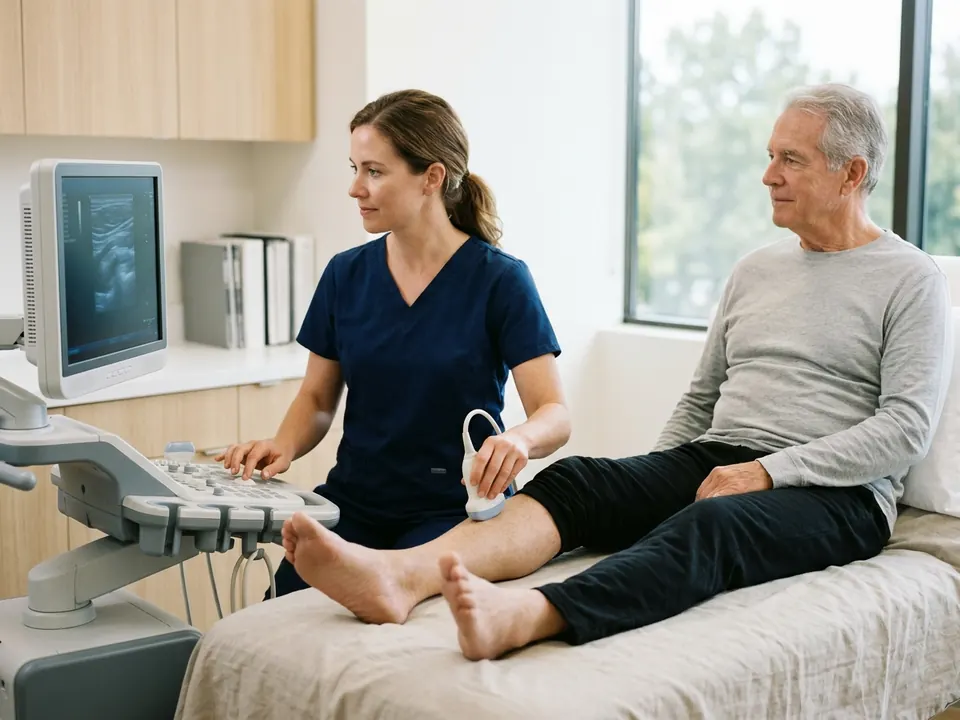
Doppler ultrasound: This test does an ultrasound on the lower limbs. It examines the site and the progression of atherosclerosis.
Angiography: This involves inserting a catheter into the femoral artery and selectively guiding it to the artery being examined. A radiodense contrast agent is injected in and an x-ray is taken.
Computerized tomography (CT): Modern multislice computerized tomography scanners are used as an alternative to angiography. They provide direct images of the arterial system.
Magnetic resonance angiography (MRA): This test uses a computer, radio frequencies, and a large magnet to produce pictures of blood vessels in the body. The MRA produces high-resolution three-dimensional images and is safe to use.
Treatment involves:
Lifestyle changes
Smoking cessation
Diabetes management
Hypertension management
Management of high cholesterol
Regular exercise
Medication
Your doctor may prescribe medication in some cases to improve symptoms or to treat an underlying disease.
Anti-hypertensive are widely used to widen your arteries and reduce the amount of water in your blood. This helps to decrease the blood pressure.
Side effects include fatigue, headaches, dizziness and a persistent dry cough but pass after a few days. However, the cough may last longer.
Revascularization
Your doctor may refer you to a surgeon-vascular or endovascular- if your symptoms do not get better after making lifestyle changes and using medication.
Angioplasty: This is as procedure done on solitary lesions in larger arteries
Atherectomy: This involves scraping off the plaque from the inside of the vessel wall
Vascular bypass: This can be done to bypass a diseased area
Amputation: This is the preferred chaise when gangrene sets in
Thrombectomy: This is done in cases of embolism or arterial thrombosis
About Peripheral Artery Disease Therapy
Key facts to plan your treatment: how long it takes, your hospital stay, anaesthesia, risks and recovery.
Recovery
Information coming soon. Request a consultation for personalized recovery guidance. Get Quote →
After care
Information coming soon. Request a consultation for personalized recovery guidance. Get Quote →
 Network of cardiology