The unified Hygeia & Mitera Hospital imaging departments constitute the largest state-of-the art imaging complex in Greece, both in private and public healthcare sector.
What is a PET scan?
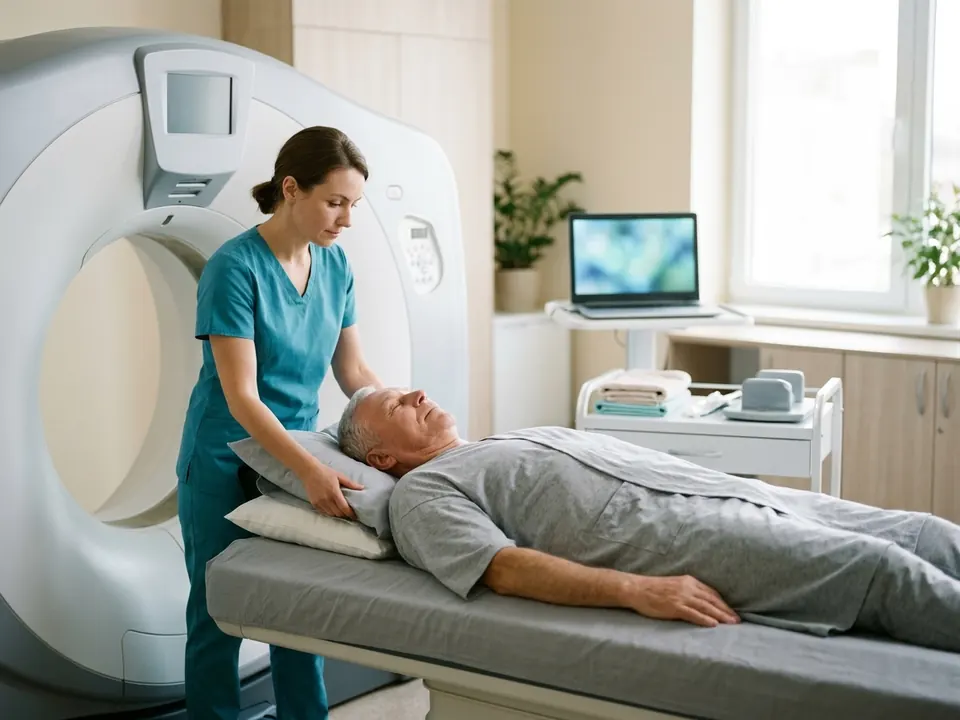
A PET scan (positron emission tomography) is an imaging test that can help reveal how your tissues and organs are functioning. To show this chemical activity, a small amount of radioactive material must enter your body.
The precise type of radioactive material, and its delivery method, depends on which organ or tissue is being studied by the PET scan. The radioactive material may be injected into a vein, inhaled or swallowed.
What are PET scans used for?
Currently, PET scans are most commonly used to detect:
- cancer
- heart problems
- brain disorders
- central nervous system disorders
Is the PET scan painfull?
When the radioactive substance is inserted into your vein you will feel temporary pain.
There shouldn't be any pain during the actual PET scan.
What other tests are combined with a PET scan?
PET scan is often combined with other imaging tests, such as CT scan and MRI.
The combination of the tests improves the clarity of the images and makes it easier for the physician to interpret the results.
About PET Scan
Key facts to plan your treatment: how long it takes, your hospital stay, anaesthesia, risks and recovery.
Duration of surgery/treatment
The test takes between 1.5 to 2 hours to complete.
Days admitted
PET scan is done on an outpatient basis. No hospitalization is required.
Recovery
Information coming soon. Request a consultation for personalized recovery guidance. Get Quote →
Risks
A radioactive substance is used during a PET scan, but the amount of radiation that you are exposed to is low and is not considered dangerous.
However, for pregnant woman and for woman who are breastfeeding, the radioactive material might be harmful.
After care
Information coming soon. Request a consultation for personalized recovery guidance. Get Quote →
 Hygeia Hospital
 JCI
 ISO