

Skip to hospitals

Ophthalmology care in Israel

Pneumatic Retinopexy in Israel

Hospitals, clinics and medical centers in Israel performing Pneumatic Retinopexy.

✓ Listed hospitals✓ Free consultation✓ No obligation
An eye surgeon using an ophthalmoscope to inspect a patient's retina.

Trusted by

  • +22 millionusers
  • +482,000patients assisted
  • +4,060medical centers
  • +18years of experience in medical tourism

At a glance

Key planning information for pneumatic retinopexy in Israel.

2 hospitalsList pneumatic retinopexy

Pneumatic Retinopexy in Israel is priced per case at 2 hospitals. Each hospital quotes its own price for your case.

Hospitals and clinics offering Pneumatic Retinopexy in Israel

Pneumatic Retinopexy is listed by 2 hospitals in Israel. The order reshuffles every hour so each gets equal exposure.

Showing 1–2 of 2 hospitals
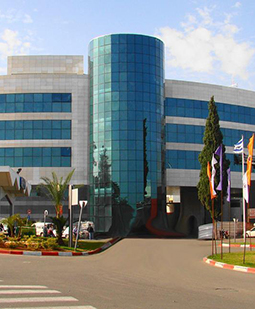
Rambam Medical Center — photoPublic University Hospital
Haifa, Israel
JCI Gold Seal of ApprovalJCIPrice on request

The Department of Ophthalmology utilizes advanced and sophisticated technologies in its field, which enable performing the most accurate and gentle surgical procedures and laser treatments, diagnosis of complex and obscure conditions, and provision of novel and modern therapeutic modalities.

DoctorsEBDr. Eithan Blumental
PricesPneumatic Retinopexy upon request
Price
Contact for quote
Description of Pneumatic Retinopexy:

What is Pneumatic Retinopexy?
Pneumatic retinopexy is a procedure to repair several kinds of retinal detachments.

About Pneumatic Retinopexy

Key facts to plan your treatment: how long it takes, your hospital stay, anaesthesia, risks and recovery.

Days admitted
The procedure is usually done as an outpatient procedure.
Anesthesia
Local anesthesia
Recovery
The patient will take about 3 weeks to recover.
Risks
- Proliferative vitreoretinopathy (PVR), i.e. retina scarring that may cause retinal detachment again. - New breaks and tears - More surgeries may be required to reattach the retina. - The fluid under the retina may persist and take a lot of time to be absorbed. - Small bubbles may be trapped beneath the retina. Other rare complications include: - Macula detachment affecting central vision - Choroid detachment - A rise in pressure inside the eye - Vitreous hemorrhage - Subretinal hemorrhage
After care
- For 1 to 3 weeks after the procedure, the patient must keep the head and eye positioned properly for 16 to 21 hours a day. - The patient should avoid lying back to prevent the bubble from moving to the front of the eye and pressing against the lens. - Airplane travel should be strictly avoided as the gas bubble may expand and the pressure inside the eye may increase. The doctor should be informed if the following symptoms occur: - Rise in pain and redness - Diminishing vision - Swelling around the eye - Discharge from the eye - Any vision problems

Patient reviews

Reviews coming soon.

Common questions

Frequently asked questions

Have a question? Get a free consultation.

Ready to compare pneumatic retinopexy hospitals in Israel?

Choose a hospital and send your enquiry to its international patient team. Each replies with its own price and plan.

Free consultation • No obligation
