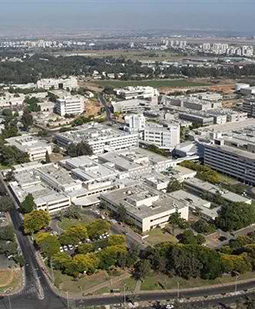
The largest medical center in Israel and the Middle East, internationally renowned for it's medical excellence. Around 31,000 inpatients are treated annually.
DoctorsM(Prof. Mordechai (motti) GutmanYGDr. Yuri GoldesView all 6
A private hospital located on the shorelines of Herzliya, just off Tel Aviv, offering healthcare services to both local and foreign patients. The hospital is affiliated with over 500 Israeli physicians, many of whom hold high level positions at public hospitals.
DoctorsGLDr. Guttman LiveDRDr. David R. NeufeldView all 88
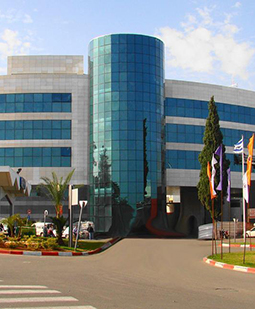
One of the largest hospitals in Israel with 900 beds and 700 physicians. The hospital serves 1000 medical tourists annually, providing advanced medical care at the highest western standards.
This is a branch of medicine that deals with diagnosing, treating and managing disorders and diseases of the colon, rectum, and anus. Proctology is also known as colorectal surgery. Medical doctors who practice proctology are known as proctologists. A proctoscope is an instrument that is a hollow metal tube that is short, straight and rigid.
Common disorders diagnosed by proctologists include:
Hemorrhoids: These are inflamed or enlarged veins near the anal and rectal area of the body, which may cause bleeding and pain when having bowel movements.
Anal Fissures: These are tears, cracks or rips in anal tissue due to overuse of the colorectal area, hardened stool or external causes.
Fistulas: These are abnormal tissue passageways or connections between rectal tissue and anal tissue.
Fecal Incontinence: This is the inability to control bowel movements
Rectal Prolapse: This is a malfunction of rectal tissue which causes protrusion of the rectum through the anus.
Imperforate Anus: A birth defect characterized by a malformed anus in babies
Chronic disorders: Inflammatory bowel diseases such as Ulcerative colitis and Crohn’s disease.
Rectal Cancer, Anal Cancer, Colon Cancer.
Anal Injury.
Foreign Objects in the colon, anus or rectum.
Severe constipation
Signs and symptoms that you need to see a proctologist
Feeling or seeing an external anal lump
Discharge from the anus
A red swelling on the buttocks that is painful
Change in size of your bowel movement or bowel habits
A diagnosis that the source of your anemia may be in your anus, rectum or colon
You require a screening colonoscopy
You have a history of polyps or colorectal cancer and need a screening colonoscopy
You want to manage irritable bowel syndrome
You need an operation for a colon inflammation, inflammatory bowel disease or colorectal cancer
What Procedures are performed in Proctology?
Diagnostic procedures
Colonoscopy: The doctor uses this procedure to examine the whole large bowel
Proctoscopy: A proctoscope is inserted into the rectum allowing for an unobstructed view of the interior of the rectal cavity. This procedure is normally done to inspect for rectal polyps or hemorrhoids. The procedure might be mildly uncomfortable as the proctoscope is put into the rectum.
Sigmoidoscopy: This minimally invasive medical examination of the large intestine, from the rectum upto the last part of the colon.
Defecating proctography: This is a type of medical imaging in a patient's defecation are observed at various stages using a fluoroscope.
Surgical treatment
Colectomy: This surgery removes all or part of your colon.
Polypectomy: This is surgery that removes polyps that may turn cancerous.
Strictureplasty: The surgery restores free to flow through the bowel without removing the narrowed segments.
Hemorrhoidectomy: This is surgery to remove severe or extensive hemorrhoids that are internal or external.
Anoplasty: This is surgery that repairs defect so that stool can be able to move through the rectum.
Colostomy: This procedure provides an alternate opening for stool to pass and is also called hemorrhoid banding.
About Proctology
Key facts to plan your treatment: how long it takes, your hospital stay, anaesthesia, risks and recovery.
Recovery
Information coming soon. Request a consultation for personalized recovery guidance. Get Quote →
Risks
• Infection of the surgical site
• Anastomotic leakage
• Tearing of the intestinal wall by the instrument used
• Localized bleeding
After care
Information coming soon. Request a consultation for personalized recovery guidance. Get Quote →
 Public Hospital
 JCIPrice on request

 Public University Hospital
 Private Hospital
 Public Hospital
 ISOPrice on request