What is a sleep study?This is a test that records what happens to your body during sleep. There are two main types of sleep which are rapid eye movement (REM) and nonrapid eye movement (NREM). In normal cases, NREM and REM alternate 4- 5 times in a night’s sleep. If there is a change in this cycle it may cause sleep problems.
Why is a sleep study done?A sleep study is done to investigate the cause of your sleep problems. These include;
- Sleep apnea which is regular stops in breathing during sleep for 10 seconds or longer
- Night terrors
- Excessive snoring
- Sleepwalking
- Narcolepsy (problem staying awake.)
- Bedwetting
- Insomnia
- Shift work sleeping disorder
- Periodic limb movement disorder
Types of sleep studiesPolysomnogram study
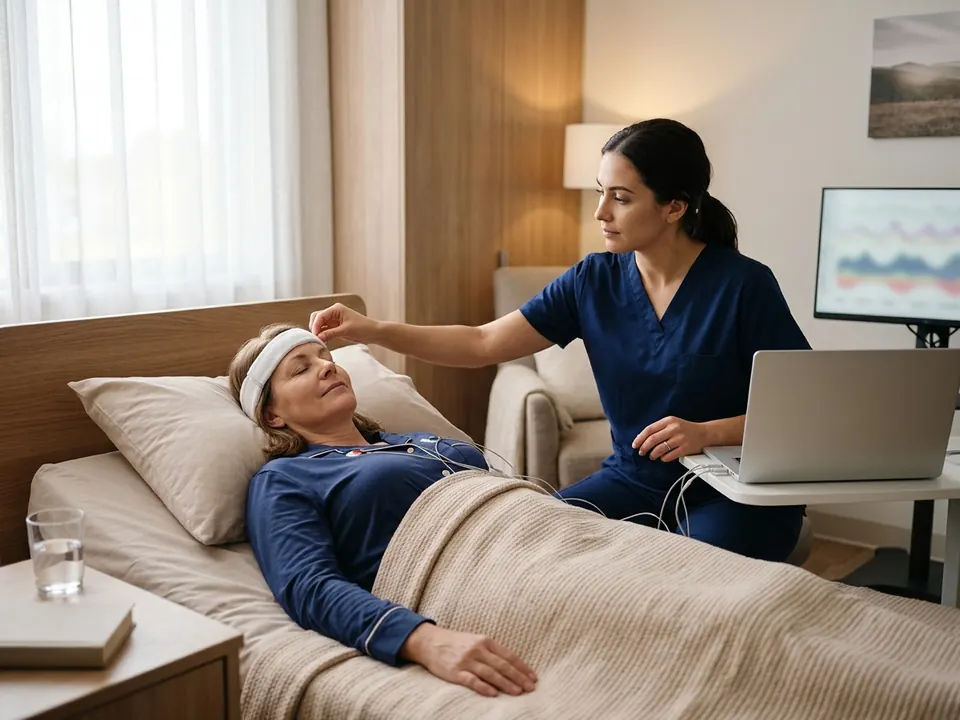
This involves attaching electrodes to your head and body with glue and tape. The electrodes record your brain activity, heart rate and rhythm, eye movement, oxygen and carbon dioxide levels, breathing rate and rhythm, the flow of air through your nose and mouth, body muscle movements, the amount of snoring and belly and chest movements.
An oximeter (small clip) is placed on your earlobe or tip of your index finger to measure your blood oxygen levels. Soft elastic belts are placed on your chest and belly to measure your breathing. The oximeter, soft elastic belts, and electrodes are all designed to be as comfortable as possible and should not make sleep difficult.
As the test begins you will be asked to do things such as move your legs and blink your eyes to ensure the equipment is working correctly. As you sleep the recording equipment will record your activities and movements as you sleep. A technician in a separate room checks the recordings. If you suffer sleep apnea you may be asked to wear a mask that is connected to a continuous positive airway pressure machine (CPAP). This delivers extra oxygen and increases the air pressure in your throat so that your airway is more open when you breathe in. You will need to spend at least 6 hours overnight in the sleep lab.
Multiple sleep latency testThis test will require you to stay in the sleep lab overnight and part of the next day. During this test, you will take naps after every two hours once the nighttime sleep test is done. You are given 20 minutes to fall asleep. If you take a nap you are woken after 15 minutes. In between the naps you try to stay awake. A technician records the time it takes a patient to fall asleep for the naps as well as the sleep patterns during the naps.
Maintenance of wakefulness test (MWT)For this test you will need to stay at the sleep lab overnight and part of the next day. During the day you will try to stay awake without napping. The information is recorded with the same equipment used in a polysomnographic study.
How It FeelsSleep studies are painless. The glue can easily be washed off after the test.
 Private Hospital
 JCIPrice on request