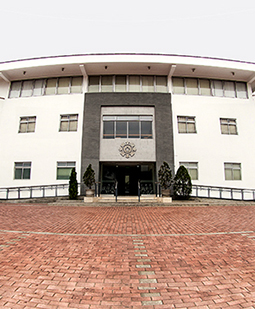
 Private Clinic
Lima, Peru
 JCIPrice on request
We have highly trained professionals and state-of-the-art equipment for the care of neurosurgery.
PricesStereotactic Radiosurgery upon request
Price
Contact for quote
Neurosurgery care in Peru
Hospitals and medical centers in Peru performing Stereotactic Radiosurgery.
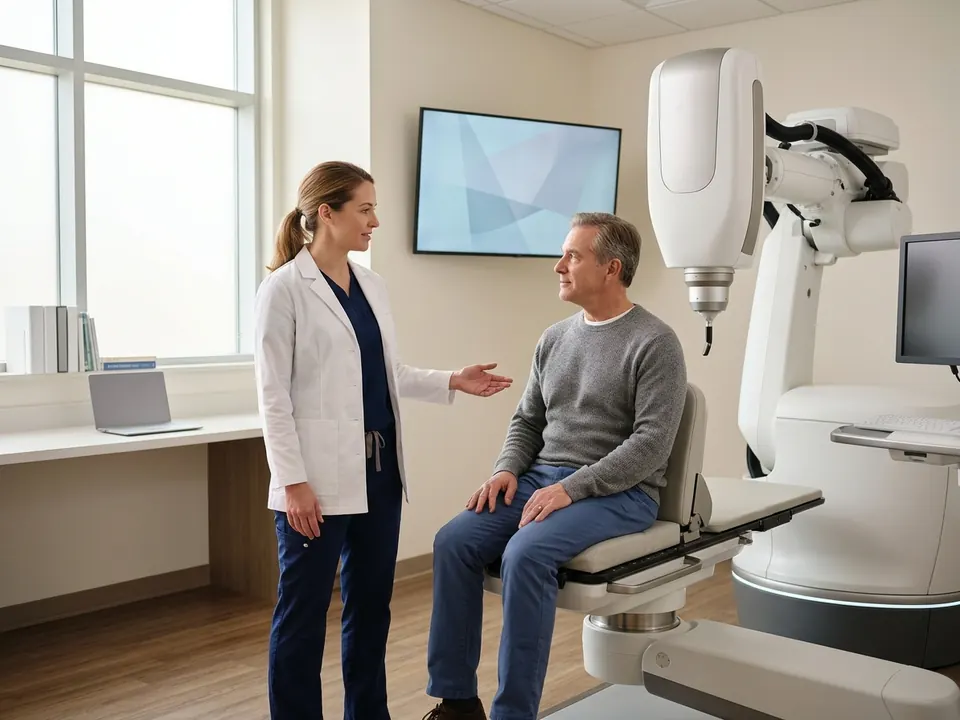
Key planning information for stereotactic radiosurgery in Peru.
Stereotactic Radiosurgery in Peru is priced per case at 1 hospital. The operation takes 1 to 2 hours, with 12 hours in hospital. Each hospital quotes its own price for your case.
Stereotactic Radiosurgery is listed by 1 hospital in Peru. The order reshuffles every hour so each gets equal exposure.
Private ClinicJCIPrice on requestWe have highly trained professionals and state-of-the-art equipment for the care of neurosurgery.
Stereotactic radiosurgery is a type of radiation treatment that uses high-powered x-rays focused on a specific part of the head.
Stereotactic radiosurgery does not involve surgery but it is a form of radiation therapy used as a treatment for brain tumors, eye tumors, and various malformations and disorders in the brain. A three-dimensional system is used to target the beams to the specific location that needs radiation therapy. It is mostly done on the head and neck. The extreme energy of the radiation kills the targeted cells. Since it focuses only on the target location, the surrounding tissues are not harmed by the radiation. Stereotactic radiosurgery can access tumors and malformations that cannot be accessed by open-skull surgery.
Stereotactic radiosurgery are mostly done using the Gamma Knife machine and by using a linear accelerator machine. Gamma Knife is a static machine used mostly on tumors and blood vessels. It can deliver a very accurate radiation to the target. Stereotactic radiosurgery using a movable linear accelerator machine is used in the case of large tumors. In this type of procedure, several doses of radiation may need to be delivered to the patient over many weeks.
During stereotactic radiosurgery, the patient needs to lie down on a table. The table glides into a machine that gives out radiation beams. The patient usually has a head frame attached to the scalp to keep the patient still through out the procedure. The frame may be fixed with pins or anchors that are attached to the skin but not to the skull bone. A particular plastic mask may also be fitted to the patient’s face.
An MRI or CT scan is first done to determine the particular area for treatment.
During the radiation treatment, the patient will be visible to the doctors and other medical staff. The patient will also be able to talk with the doctors with the aid of microphones.
Once the procedure ends, the head frame is removed.
Key facts to plan your treatment: how long it takes, your hospital stay, anaesthesia, risks and recovery.
Common questions
Have a question? Get a free consultation.
Choose a hospital and send your enquiry to its international patient team. Each replies with its own price and plan.
Free consultation • No obligation