 Hospital Group
Johannesburg, South Africa
Price on request
Netcare Group provides innovative, quality healthcare in South Africa and the United Kingdom.
PricesTargeted Therapies upon request
Price
Contact for quote
Oncology care in South Africa
Hospitals, clinics and medical centers in South Africa offering Targeted Therapies.

Key planning information for targeted therapies in South Africa.
Targeted Therapies in South Africa is priced per case at 4 hospitals. Each hospital quotes its own price for your case.
Targeted Therapies is listed by 4 hospitals in South Africa. The order reshuffles every hour so each gets equal exposure.
Hospital GroupNetcare Group provides innovative, quality healthcare in South Africa and the United Kingdom.
 Hospital Group
Life Healthcare is a leading private hospital operator in South Africa and primarily serves the market for privately insured individuals, representing approximately eight million people. The group provides mainly acute care, high technology private hospital services.
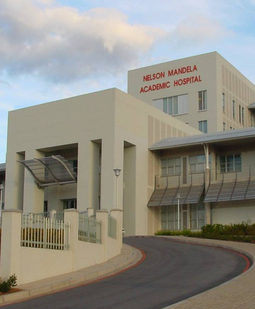 Private Hospital
Nelson Mandela Academic Hospital is a large Provincial government funded hospital situated in central Mthatha in South Africa. It is a tertiary teaching hospital and forms part of the Mthatha Hospital Complex.
 Private Hospital
The extensive hospital network includes 64 hospitals (of which 57 are majority owned by Life Healthcare and another seven in which the group holds substantial minority ownership), providing a range of healthcare services throughout South Africa.
Targeted therapies are drugs that block the growth and spread of cancer by interfering with specific molecules which are needed for the growth, progression, and spread of cancer cells. Targeted therapy may be combined with chemotherapy and other treatments.
These kinds of therapies are more effective and less harmful to normal cells. It acts on specific molecular targets which are associated with cancer, as compared to chemotherapy which acts on all dividing cancer cells. Specially designed to interact with its target, it keeps the cells from living longer than normal. It blocks tumor cell proliferation and turns off the signals that tell cancer cells to grow and divide. They are chemical entities that specifically target a protein or enzyme that carries a mutation that targets cancer cells.
Small molecule drugs: Theses drugs act by blocking the process that helps the multiplication and spread of cancer cells. They keep the tissue around the tumor from making blood vessels, which bring the tumor nutrients. This works by starving the tumor through keeping new blood vessels from developing.
Monoclonal antibodies: These drugs act by blocking a specific target on the outside of cancer cells or in the area around cancer. They can also directly send toxic substances to the cancer cells. These drugs are given intravenously.
Having the target does not necessarily mean that the tumor will respond to the drug. In addition, the drug might initially work but then stop. Targeted therapy may not work if the tumor does not have the target. Most times targeted therapy has to be combined with other cancer treatments such as chemotherapy.
Breast cancer: most breast cancer has an excess of a protein called human epidermal growth factor receptor. This protein is responsible for the growth of tumor cells.
Colorectal cancer: These cancers make too much of a protein called (EGFR) epidermal growth factor receptor. Drugs that block EGFR help to stop and slow cancer growth.
Lung cancer: Drugs that block EGFR slows down lung cancer. Targeted therapy for lung cancer is also available with a mutation in the ALK gene.
Melanoma: Half of the melanomas have a mutation in the BRAF gene. BRAF mutations make good drug targets. However, these drugs can be risky if you do not have the BRAF gene.
Targeted therapy is the focus of development of anticancer drugs. As such it is key to precision medicine, which uses information about your genes and proteins to prevent, diagnose and treat cancer.
Most targeted therapies have been approved by the food and drug administration (FDA) to treat specific types of cancer. Others are still being studied in human and animal clinical trials.
Key facts to plan your treatment: how long it takes, your hospital stay, anaesthesia, risks and recovery.
Common questions
Have a question? Get a free consultation.
Choose a hospital and send your enquiry to its international patient team. Each replies with its own price and plan.
Free consultation • No obligation