Key planning information for dilation and curettage in Israel.
20–30 minsProcedure time
6 hospitalsList dilation and curettage
Dilation and Curettage in Israel is priced per case at 6 hospitals. The operation takes 20 to 30 minutes. Each hospital quotes its own price for your case.
Hospitals and clinics offering Dilation and Curettage in Israel
Dilation and Curettage is listed by 6 hospitals in Israel. The order reshuffles every hour so each gets equal exposure.
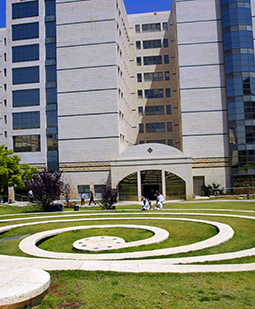
Lis Maternity and Women's Hospital is the premier facility in Israel for women's health, fertility, maternity and newborn services. Lis medical care spans the range of care for women of all ages at all lifecycle stages.
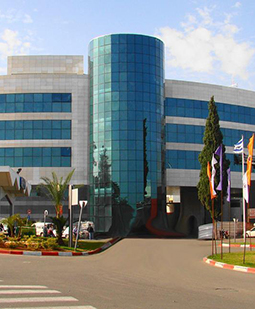
The second largest hospital in Israel, Rabin Medical Center is a tertiary care hospital that can handle the most complicated cases in all medical fields.
DoctorsDFProf. Dov FeldbergMProf. M.GlezermanView all 7
A private hospital located on the shorelines of Herzliya, just off Tel Aviv, offering healthcare services to both local and foreign patients. The hospital is affiliated with over 500 Israeli physicians, many of whom hold high level positions at public hospitals.
DoctorsAZProf. Appleman ZviDFProf. Dov FeldbergView all 124
Hadassah medical institution includes two university hospitals in Jerusalem – on Mt. Scopus and in Ein Kerem. Both provide advanced tetriary healthcare services in all medical specialties.
DoctorsASDr. Asher ShooshanABDr. Abraham Ben-ShooshanView all 24
One of the largest hospitals in Israel with 900 beds and 700 physicians. The hospital serves 1000 medical tourists annually, providing advanced medical care at the highest western standards.
What is Dilation and Curettage?
Dilation and curettage (D&C) is a surgical procedure in which the cervix is dilated and the contents of the uterus are scraped and scooped out, which is known as curettage. This is a remedial gynecological procedure and is used in rare cases of first trimester abortion.
How is Dilation and Curettage Performed?
Dilation and curettage involves two steps:
Step 1: Dilation
The cervix is grasped with a clamp and a thin flexible metallic tube is inserted to find out the depth and angle of the uterus. This is done to determine how far the curette can be inserted safely into the uterus. It takes approximately 10 minutes for the cervix to expand. The dilation may alternatively be done by using Laminaria tents, which may be inserted 8 to 20 hours before the dilation procedure. The Laminaria absorbs fluids and swells up. This causes the cervix to be dilated in a less traumatic way as compared to using metallic dilators for dilation.
Step 2: Hysteroscopy and Curettage
After the dilation procedure, a speculum is used to open the vagina and a tiny spoon is used to extract a sample of the lining of the cervix. The hysteroscope is at this moment entered into the uterus to view the inside of the uterus. Any polyps, fibroids or abnormal growths of the endometrium may be viewed during this procedure. Biopsies may also be performed at this time.
Then, a larger and longer curette is inserted into the uterus through the dilated cervix. The doctor then scrapes the uterine wall gently, and the collected samples are sent for lab analysis. After the completion of the curettage, the instruments are removed.
Patients who are under local anesthesia may feel a tugging sensation during the curettage and cramps may also be experienced.
How to Prepare for Dilation and Curettage?
The patient may need to do some blood and urine tests.
Sedatives may be provided before the procedure.
Deep breathing may help in easing cramps experienced during the procedure.
The patient may be required to stop taking certain medication a few days before the procedure.
Consumption of alcohol and tobacco should also be avoided.
The doctor should be informed if the patient is suffering from any ailments and medical condition.
About Dilation and Curettage
Key facts to plan your treatment: how long it takes, your hospital stay, anaesthesia, risks and recovery.
Duration of surgery/treatment
20 to 30 minutes
Days admitted
Dilation and curettage is usually done as an outpatient procedure.
Anesthesia
General anesthesia is usually used for this procedure. However, in some cases local anesthesia is administered.
Recovery
- After the procedure the patient is taken to the recovery room until the effects of anesthesia wear out.
- The patient will experience cramps, which lasts for a day or longer.
- The patient may also experience bleeding for some days after the procedure.
- The patient will not be able to drive for 24 hours after the procedure.
- Pain medication may be prescribed by the doctor.
Risks
Dilation and curettage involves certain risks that include:
- Infection, the symptoms of which are fever, bleeding, intensified cramps, and foul-smelling discharge from the vagina.
- Risks of general anesthesia, the symptoms of which include failed intubation and pulmonary aspiration.
- Uterus perforation
- Bowel or bladder puncture
- Severe scraping that causes extensive uterus scarring, which may lead to Asherman’s syndrome.
After care
- Most patients can get back to normal activities soon after the procedure.
- Patients should avoid activities that involve penetration, such as sexual intercourse and using tampons, for two weeks after the procedure to avoid infection.
The doctor should be informed if the following symptoms occur:
- Fever
- Cramps that are not relieved by medication
- Prolonged bleeding
- Foul-smelling vaginal discharge

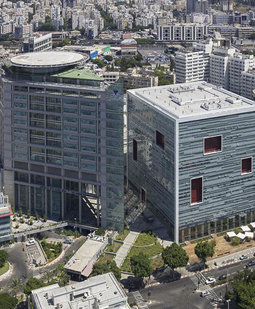 Public University Hospital
 JCI
 ISO