 Hospital Group
Johannesburg, South Africa
Price on request
Netcare Group provides innovative, quality healthcare in South Africa and the United Kingdom.
PricesHirsutism Treatment upon request
Price
Contact for quote
Endocrinology care in South Africa
Hospitals and medical centers in South Africa performing Hirsutism treatment.

Key planning information for hirsutism treatment in South Africa.
Hirsutism Treatment in South Africa is priced per case at 4 hospitals. Each hospital quotes its own price for your case.
Hirsutism Treatment is listed by 4 hospitals in South Africa. The order reshuffles every hour so each gets equal exposure.
Hospital GroupNetcare Group provides innovative, quality healthcare in South Africa and the United Kingdom.
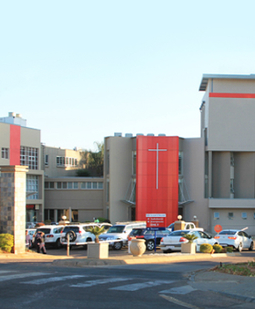 Hospital Group
Life Healthcare is a leading private hospital operator in South Africa and primarily serves the market for privately insured individuals, representing approximately eight million people. The group provides mainly acute care, high technology private hospital services.
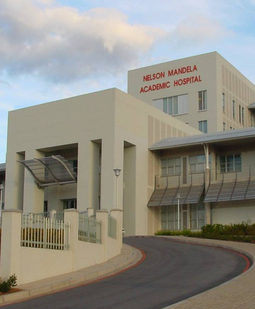 Private Hospital
Nelson Mandela Academic Hospital is a large Provincial government funded hospital situated in central Mthatha in South Africa. It is a tertiary teaching hospital and forms part of the Mthatha Hospital Complex.
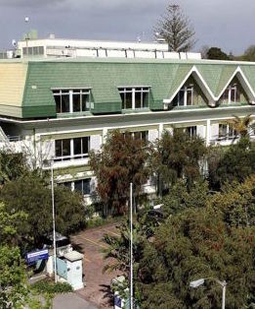 Private Hospital
The extensive hospital network includes 64 hospitals (of which 57 are majority owned by Life Healthcare and another seven in which the group holds substantial minority ownership), providing a range of healthcare services throughout South Africa.
This is a condition that affects women resulting in excessive hair growth. The hair is usually dark and thick and grows on body areas where men typically grow hair.
The most common symptom when a woman has hirsutism is excessive hair. Excess hair may appear on parts of the body such as the face (the upper lip or chin), chest, neck, tummy usually in a line from your belly button down to your pubic hair, anal and genital area and the front of your thighs. Other symptoms associated with hirsutism include:
It's important to see your doctor if you have symptoms of hirsutism, especially if the symptoms are severe or unusual. Hirsutism can lead to psychological harm, including embarrassment, lack of self-confidence and depression. Your doctor will assess the severity of your condition by grading the growth of your hair on several parts of your body. He/she will ask you questions to see if there is an underlying cause.
Imaging testsYour doctor will assess ovulation and ovaries through imaging tests such as ultrasound
Blood testsYour doctor may also order some blood tests. Blood value that may be evaluated in the workup includes:
There is no cure for hirsutism, but there are treatments to manage the condition.
Some medicines that have not been specifically tested for this purpose are known to be effective.
The life cycle of hair is around six months. Therefore, treatment can take this long to work and it is important to start treatment as soon as possible.
Lifestyle changes such as addressing insulin resistance and reducing excessive weight may be beneficial. Insulin resistance can cause an excess of testosterone levels.
There are also various hair-removal methods that are used, such as:In some cases, hair removal methods lead to irritated skin or folliculitis where the hair follicles. Become inflamed. Folliculate usually takes a few weeks to resolve itself and you may have to discontinue hair removal until it clears up.
Key facts to plan your treatment: how long it takes, your hospital stay, anaesthesia, risks and recovery.
Common questions
Have a question? Get a free consultation.
Choose a hospital and send your enquiry to its international patient team. Each replies with its own price and plan.
Free consultation • No obligation