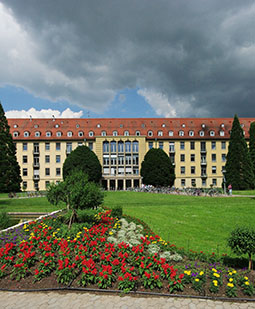
One of Germany's largest hospitals, made up of more than 50 clinics and specialist institutes spanning all medical specialties. Kinikum Stuttgart is regarded as one of the best hospitals in Germany, and is a referral center for oncology, ENT, pediatrics and more.
DoctorsDWDr. Dieter WeingartIWDr. I. WohlwenderView all 9
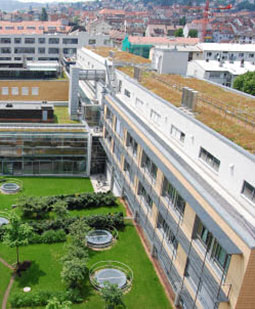
The University Medical Center Freiburg is one of the largest medical facilities in Europe and part of the Albert Ludwigs University Freiburg, one of five outstanding centers of academic excellency in Germany.
DoctorsJRProf. Jörg R. StrubEHProf. Elmar HellwigView all 3
Maxillofacial surgery is a surgical subspecialty of medicine that diagnoses and treats defects, diseases and injuries to the hard and soft tissues of the mouth (oral) and jaws and face region (maxillofacial). These diseases, injuries or defects may interfere with the function or aesthetics of the oral and maxillofacial region.
Who performs maxillofacial surgery?
This kind of surgery is performed by a maxillofacial surgeon. Such a surgeon is specialized in treating the entire craniomaxillofacial complex. This includes the anatomical area of the skull, face, mouth, and jaws as well as associated structures.
What kind of training do maxillofacial surgeons have?
Depending on the location, maxillofacial surgeons may have training in general medicine, dentistry, and surgery. Training and qualification in medicine can be optionally undertaken. They may also undergo additional optional training for 1or 2 years in oral and maxillofacial surgery fellowship training. This fellowship can be in the following areas:
Cosmetic facial surgery
Head and neck cancer-microvascular reconstruction
Cranio-maxillofacial trauma
Craniofacial surgery
Head and neck reconstruction
Maxillofacial regeneration
Why see a maxillofacial surgeon?
To have dental implants inserted to replace teeth.
To have oral surgical procedures performed
To have an oral, facial or jaw cyst or tumor diagnosed and treated.
To have your jaw aligned
To have your jaw joints repaired
To have facial and jaw reconstruction after cancer surgery
To have the facial bones realigned after facial trauma.
To consult so as to determine whether to have aesthetic surgery
To have a tooth extracted
Surgical procedures
Treatments may be performed on the craniomaxillofacial complex which includes the face, neck, mouth, jaws and include:
Dentoalveolar surgery: This is surgery for difficult tooth extraction, to remove impacted teeth, extractions on medically compromised patients, bone grafting or pre-prosthetic surgery, dentures, or other dental prostheses.
Surgery to insert bone fused maxillofacial implants and dental implants for attaching bone anchored hearing aids and craniofacial prostheses.
Cosmetic surgery of the head and neck: This includes facelift, browlift, blepharoplasty, rhinoplasty, septoplasty, cheek or chin augmentation, genioplasty, lip enhancement, oculoplastics, neck liposuction, injectable cosmetic treatments, chemical peel and botox
Corrective jaw surgery and surgical treatment of sleep apnea
How to prepare for maxillofacial surgery
If opting for sedation or general anesthesia you should not drink or eat anything 6-8 hours prior to the surgery. Also, ensure to have someone to take you home after the procedure. Any prescribed medication should be taken with only a small sip of water.
About Maxillofacial Surgery
Key facts to plan your treatment: how long it takes, your hospital stay, anaesthesia, risks and recovery.
Recovery
Information coming soon. Request a consultation for personalized recovery guidance. Get Quote →
After care
Bleeding: Most bleeding is usually under control by the time you leave. Some blood-tinged saliva or oozing may continue for a day.
Pain: The doctor will prescribe medication to manage any pain you may experience.
Swelling: This may occur immediately after the procedure. It may gradually increase over 1-3 days. Ice packs may control the swelling.
Nausea: This may result from the anesthesia or pain medication.
Diet: You should eat soft foods and drink liquids 1-2 days following the surgery. Hot and spicy foods should be avoided
Oral hygiene: This should not be avoided. Brush your teeth as usual and use warm salt water to rinse the mouth after each meal. The surgical area should not be brushed for at least 4 days following the surgery.
Activity: You can resume regular activities gradually after the first 2-3 days. This is because strenuous activities can promote bleeding.
Fever: It is normal to have an elevated body temperature following the procedure for a day.
Side effects: These are temporary and improve as healing progresses. They include an earache, restricted mouth opening, and discoloration of the skin, the temporary ache of the adjacent teeth and stretching or cracking at the mouth corners.

 Public Hospital
 ISOPrice on request