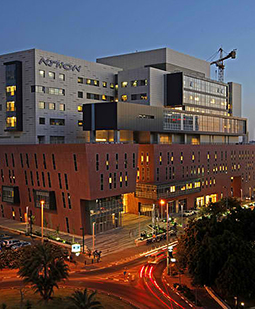
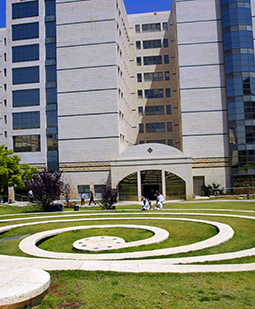
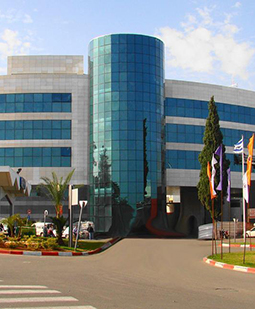
The largest medical center in Israel and the Middle East, internationally renowned for it's medical excellence. Around 31,000 inpatients are treated annually.
DoctorsAFDr. Alon FridlenderJZDr. Jacob Zauberman, MDView all 3
The Department of Neurosurgery of the Tel Aviv Sourasky Medical Center specializes in treating disorders of the brain, spinal cord, and peripheral nervous system in children and adults. TASMC is considered the leading neurosurgery facility in Israel and one of the most advanced internationally.
The Department of Neurosurgery of Rambam Health Care Campus pioneered the most advanced technology in administering Neurosurgical treatments in the country.
The Rabin Neurosurgery department has an outpatient clinic and 5 specialized units: Spinal Neurosurgery, Neurosurgical Intensive Care, Neuroendoscopy, Pediatric Neurosurgery and Endovascular Neuroradiology.
DoctorsZHProf. Zvi H.RappaportSJDr. Steven JacksonView all 7
A private hospital located on the shorelines of Herzliya, just off Tel Aviv, offering healthcare services to both local and foreign patients. The hospital is affiliated with over 500 Israeli physicians, many of whom hold high level positions at public hospitals.
DoctorsSRProf. Solomon R. DavidovichZRProf. Zvi RappoportView all 6
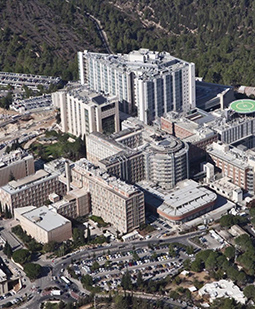
Hadassah medical institution includes two university hospitals in Jerusalem – on Mt. Scopus and in Ein Kerem. Both provide advanced tetriary healthcare services in all medical specialties.
DoctorsZIDr. Zvi Israel MBBS BScYSDr. Yigal Shoshan, MDView all 7
One of the largest hospitals in Israel with 900 beds and 700 physicians. The hospital serves 1000 medical tourists annually, providing advanced medical care at the highest western standards.
What is Peripheral Nerve Surgery?
Peripheral nerve surgery is a general term for various surgeries performed to treat peripheral nerve injuries, compression and tumors. These surgeries are conducted by surgeons from the specialized in orthopedics, neurology, cosmetic or reconstructive surgery.
What are the different methods of Peripheral Nerve Surgery?
The following are some of the methods used for peripheral nerve surgery:
Key facts to plan your treatment: how long it takes, your hospital stay, anaesthesia, risks and recovery.
Recovery
Information coming soon. Request a consultation for personalized recovery guidance. Get Quote →
After care
Information coming soon. Request a consultation for personalized recovery guidance. Get Quote →
Carpal Tunnel Decompression
Carpal tunnel decompression is a surgical procedure to treat the compression or dysfunction of the median nerve that extends through the wrist to the hand.
An incision is made in the hand and an antiseptic solution is used to wash the incision area. The incision is then made deeper below the skin and fat through the first layer. The incision is then made through the flexor retinaculum with a sharp blade. The nerve decompression is beyond the incision, into the forearm. After the bleeding stops, the incision is closed and covered with dressing and bandage.
How to prepare for carpal tunnel decompression?
The patient should inform the doctor about the following things:
Health illnesses
Medication that the patient may be taking
Allergies
Bleeding disorders
Days admitted
This surgery may be done as an out patient procedure, and the patients can go home after the surgery. However, some patients are admitted to the hospital one day before the surgery.
Anesthesia
General or local anesthesia
Recovery
- The patient is taken to the recovery room to be monitored for one hour after the surgery - Pain medication may be prescribed by the doctor. - The patient will be encouraged to keep the arm elevated. - The sutures may be removed in 7 to 12 days after the surgery - The doctor will schedule follow-up visits to check the wound. - Physiotherapy may be recommended
Risks
The common risks involved in carpal tunnel decompression are as follows: - Blood clotting - Nerve injury - Wrist pain - Scarring - Failure to treat the symptoms
After care
- The patient should drive after being discharged from the hospital. - The dressing should be changed regularly on a daily basis. - The wound should be kept dry. - The patient should try to keep the arm elevated and use it for normal activities. - Lifting heavy objects should be avoided, until the doctor permits the patient to do so.
The doctor should be informed if the following symptoms occur: - Severe pain in the wrist - Fever - Infection and swelling of the wound - Weakness or numbness in the hand or fingers
Common Peroneal Nerve Decompression
Common peroneal nerve decompression is a surgical procedure to treat the compression or dysfunction of the nerve that lies around the outer portion of the leg.
An incision is made near the knee and an antiseptic solution is used to wash the incision area. The incision is then made deeper below the skin and fat. Then the fascia above the muscle and nerve is cut with a sharp blade. The peroneal nerve is identified, which lies below the beginning of the fibula. Where the nerve enters the muscle, it is decompressed. After the bleeding stops, the incision is closed and covered with dressing and bandage.
How to prepare for common peroneal nerve decompression?
The patient should inform the doctor about the following things:
Health illnesses
Medication that the patient may be taking
Allergies
Bleeding disorders
Days admitted
This surgery may be done as an out patient procedure, and the patients can go home after the surgery. However, some patients are admitted to the hospital one day before the surgery.
Anesthesia
General or local anesthesia
Recovery
- The patient is taken to the recovery room to be monitored for one hour after the surgery - Pain medication may be prescribed by the doctor. - The sutures may be removed in 7 to 12 days after the surgery - The doctor will schedule follow-up visits to check the wound.
Risks
The common risks involved in common peroneal nerve decompressions are as follows: - Infection - Blood clotting - Nerve injury - Severe surgical pain - Scarring - Failure to treat the symptoms
After care
- The patient should drive after being discharged from the hospital. - The dressing should be changed regularly on a daily basis. - The wound should be kept dry. - Running and stressing the leg should be avoided.
The doctor should be informed if the following symptoms occur: - Severe knee pain - Fever - Infection and swelling of the wound - Weakness or numbness in the leg
Lateral Femoral Cutaneous Nerve Decompression
Lateral Femoral Cutaneous Nerve Decompression is a surgical procedure to treat the compression or dysfunction of the nerve that lies around the outer portion of the thigh, beneath the hip and above the knee. An incision is made on the skin at the groin and an antiseptic solution is used to wash the incision area. The incision is cut deeper into the first fascia layer. Then the fascia above the muscle and nerve is cut with a sharp blade. The lateral femoral cutaneous nerve is then identified, which lies beneath the fascia. The nerve is followed up to the inguinal ligament to find the exact area through which it comes. If the nerve has to be decompressed, the hole is opened. If the nerve has to be divided, it is pulled through the hole and cut. The stump is drawn back to the abdomen. After the bleeding stops, the incision is closed and covered with dressing and bandage
How to prepare for Lateral Femoral Cutaneous Nerve Decompression?
The patient should inform the doctor about the following things:
Health illnesses
Medication that the patient may be taking
Allergies
Bleeding disorders
Days admitted
This surgery may be done as an out patient procedure, and the patients can go home after the surgery. However, some patients are admitted to the hospital one day before the surgery.
Anesthesia
General or local anesthesia
Recovery
- The patient is taken to the recovery room to be monitored for one hour after the surgery - Pain medication may be prescribed by the doctor. - The sutures may be removed in 7 to 12 days after the surgery - The doctor will schedule follow-up visits to check the wound.
Risks
The common risks involved in Lateral Femoral Cutaneous Nerve Decompression are as follows: - Difficulty in finding the nerve for the surgery - Infection - Blood clotting - Nerve injury - Severe surgical pain - Scarring - Failure to treat the symptoms
After care
- The patient should drive after being discharged from the hospital. - The dressing should be changed regularly on a daily basis. - The wound should be kept dry. - Running and stressing the leg should be avoided.
The doctor should be informed if the following symptoms occur: - Severe pain in the groin - Fever - Infection and swelling of the wound
Ulnar Nerve Decompression
Ulnar nerve decompression is a surgical procedure to treat the compression or dysfunction of the ulnar nerve that runs from the elbow to the hand, which provides sensation to the little finger and half of the ring finger.
An incision is made on the skin near the elbow and an antiseptic solution is used to wash the incision area. The incision is then made deeper below the skin and fat through the first layer. Then the fascia above the muscle and nerve is cut with a sharp blade. The ulnar nerve is identified, which lies below the bone on the inner side of the elbow. The nerve is decompressed at the point where it enters the forearm muscles. After the bleeding stops, the incision is closed and covered with dressing and bandage.
How to prepare for ulnar nerve decompression?
The patient should inform the doctor about the following things:
Health illnesses
Medication that the patient may be taking
Allergies
Bleeding disorders
Days admitted
This surgery may be done as an out patient procedure, and the patients can go home after the surgery. However, some patients are admitted to the hospital one day before the surgery.
Anesthesia
General or local anesthesia
Recovery
- The patient is taken to the recovery room to be monitored for one hour after the surgery - Pain medication may be prescribed by the doctor. - The patient will be encouraged to keep the arm elevated. - The sutures may be removed in 7 to 12 days after the surgery - The doctor will schedule follow-up visits to check the wound.
Risks
The common risks involved in ulnar nerve decompression are as follows: - Blood clotting - Nerve injury - Elbow pain - Scarring - Failure to treat the symptoms
After care
- The patient should drive after being discharged from the hospital. - The dressing should be changed regularly on a daily basis. - The wound should be kept dry. - The patient should try to keep the arm elevated and use it for normal activities. - Lifting heavy objects should be avoided, until the doctor permits the patient to do so.
The doctor should be informed if the following symptoms occur: - Severe pain in the wound or elbow - Fever - Infection and swelling of the wound - Weakness or numbness in the hand
 Public Hospital
 JCIPrice on request
 ISO