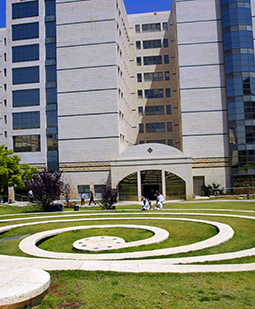
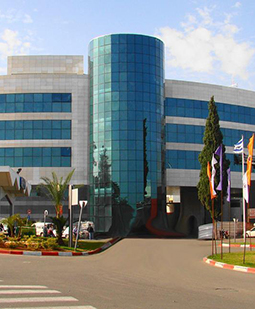
The Division of Cardiology at the Tel Aviv Sourasky Medical Center cares for the complete spectrum of heart patients, from critically ill patients (such as heart attack patients); to chronic patients who require ongoing therapeutic monitoring, or rehabilitation; to patients seeking preventive care.
The Department of Cardiology performs all examinations and tests related to heart disease, and treats the entire range of these disorders. Patients at Rambam Health Care Campus requiring diagnosis, treatment, and/or clinical follow-up of heart diseases are hospitalized in this department.
DoctorsALDr. Abraham Lorber, MDNEDr. Nikolsky EugeniaView all 3
The second largest hospital in Israel, Rabin Medical Center is a tertiary care hospital that can handle the most complicated cases in all medical fields.
DoctorsEPDr. Eyal PoratABProf. Alexander BattlerView all 12
Hadassah medical institution includes two university hospitals in Jerusalem – on Mt. Scopus and in Ein Kerem. Both provide advanced tetriary healthcare services in all medical specialties.
DoctorsOSProf. Oz ShapiraHDProf. Haim DanenbergView all 18
One of the largest hospitals in Israel with 900 beds and 700 physicians. The hospital serves 1000 medical tourists annually, providing advanced medical care at the highest western standards.
This is a devastating disease that stiffens and damages the heart’s valves due to inflammation. It disrupts the normal blood flow of the heart. The disease usually affects the left-sided heart valves. However, due to malfunction of the left-sided heart valves the right side valves are damaged indirectly.
Causes of rheumatic heart disease
It is caused by a bacterial infection caused by the bacterium Group A Streptococcus (GAS).When the body is exposed to the bacterium it generates antibodies to destroy the bacteria. However, the bacterial cell wall and heart tissue are similar in structure and the antibodies may attack the heart tissue as well as the bacteria.
Rheumatic heart disease usually occurs after repeated heart valve damage due to repeated episodes of acute rheumatic fever which may sometimes be asymptomatic. In the early stages, it manifests in a leakiness of a left-sided valve which leaks blood from the lower ventricle to the upper atrium. The mitral valve can also narrow or constrict resulting in obstructed blood flow. The back pressure from this can cause leakiness of the right-sided valves and the right chambers may enlarge.
Risk factors
Overcrowding
Poor access to healthcare
Inadequate hygiene
Lack of awareness
Symptoms of rheumatic heart disease
Shortness of breath
Fatigue
Ankle swelling
Formation of blood clots
Palpitations
Stroke
Dizziness
Chest pain
Diagnosis
If you experience the symptoms of rheumatic heart disease you should see your doctor.
The doctor suspects that you have rheumatic heart disease he will need to identify abnormal heart murmurs. This is generated from the diseased heart valves and may be inaccurate in the early stages.
Some of the procedures that can be carried out to diagnose rheumatic heart disease include balloon dilatation of the narrowed valve, open-heart valve surgery, and echocardiography.
Echocardiography involves scanning of the heart using ultrasound. It helps to diagnose and identify the affected valves which are thick and distorted.
Prevention and treatment of rheumatic heart disease
Primordial prevention: This focuses on better living conditions, access to medical care and proper hygiene.
Primary prevention: This focuses on treating all GAS sore throat by penicillin to prevent he initial attack. Oral antibiotic may be administered for 10 days or single intramuscular injection.
Secondary prevention: This focuses on administering penicillin after initial acute rheumatic fever attack to avoid re-infection which in turn prevents subsequent episodes.
Surgery: This is required to replace or repair damaged heart valves.
About Rheumatic Heart Disease Treatment
Key facts to plan your treatment: how long it takes, your hospital stay, anaesthesia, risks and recovery.
Recovery
Information coming soon. Request a consultation for personalized recovery guidance. Get Quote →
Risks
Complications of rheumatic fever:
Mild rheumatic heart disease can usually be treated with medication, such as ACE inhibitors, which relax your arteries, making it easier for your heart to pump blood around your body.
-Atrial fibrillation: This is a heart condition that causes an abnormally fast and irregular heart rate. Treatment involves medication to control the heart rhythm and medication to prevent stroke.
-Heart failure: This leads to extensive damage to the heart to the point it cannot pump enough blood around the body. Treatment involves surgery to expand damaged valve with a balloon or to replace it with an artificial valve.
-Endocarditis prophylaxis: This is an infection of the heart valves. Antibiotics are given during surgery to prevent infection.
After care
Information coming soon. Request a consultation for personalized recovery guidance. Get Quote →

 Public University Hospital
 JCI
 ISO