 Private Hospital
Bangkok, Thailand
 JCI
 Thai HA
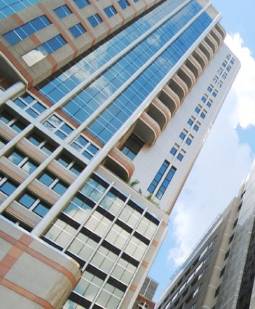
Bumrungrad International is an internationally accredited, multi-specialty hospital located in the heart of Bangkok, Thailand.
ALS & Neuromuscular Disorders is available at
Price
Contact for quote
Neurology care in Thailand
Hospitals and medical centers in Thailand who have ALS & Neuromuscular Disordersspecialists.

Key planning information for als & neuromuscular disorders in Thailand.
ALS & Neuromuscular Disorders in Thailand is priced per case at 2 hospitals. Each hospital quotes its own price for your case.
ALS & Neuromuscular Disorders is listed by 2 hospitals in Thailand. The order reshuffles every hour so each gets equal exposure.
Private HospitalBumrungrad International is an internationally accredited, multi-specialty hospital located in the heart of Bangkok, Thailand.
ALS & Neuromuscular Disorders is available at
 Private Hospital
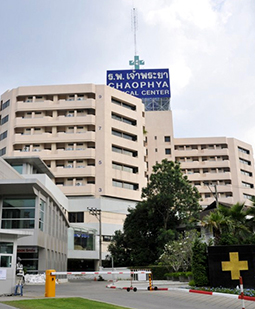
The Chaophya Hospital is a JCI accredited, tertiary private hospital in Bangkok, Thailand, which has been in operation since 1991. It has an international department which offers a comprehensive range of supporting services to foreign patients.
ALS & Neuromuscular Disorders is available at
Amyotrophic lateral sclerosis (ALS, is a condition where certain nerve cells in the spinal cord and brain gradually die. These nerve cells are referred to as motor neurons, and they control the muscles, which let you move your body parts. ALS is as well known as Lou Gehrig's disease.
Discussing with your physician, joining a support group, or getting counseling, can help you manage your feelings. Your family members might as well need counseling and support as your disease worsens.
Doctors do not know what brings about ALS. In roughly 1 case out of ten, it runs in families. This implies 9 times out of ten, an individual with ALS does not have a family member with the condition.
The first sign of Amyotrophic lateral sclerosis is usually weakness in the tongue, one hand, one leg, or the face. The weakness gradually spreads to both legs and arms. This occurs as the motor neurons gradually die, they stop transmitting signals to the muscles. So the muscles do not have anything informing them to move. As time passes, without signals from the motor neurons telling the muscles to move, the muscles become small and weak.
As time passes, ALS as well leads to:
It may be difficult for your doctor to tell if you have the condition. It might not be clear that you have the ASL until symptoms worsen or until your physician has conducted more testing. To check if you have the disease, your doctor will perform a physical examination and will ask you regarding your past health and symptoms. You will as well have tests, which show how your nerves and muscles are working.
Simply because you have twitching, fatigue, muscle weakness, and stiffness does not imply that you have ALS. Those symptoms may also be due to other conditions. So consult your doctor if you have those symptoms. The physician will refer you to a neurologist to confirm.
There's no cure for the disease; however, treatment may help you stay strong and independent for as long as possible. For instance:
A medicine known as riluzole (Rilutek) might extend survival by roughly two months. However, it does not improve the quality of life or symptoms in ways that those with ASL, their doctors, their caregivers have been able to notice. Many people stand the effects of riluzole very well; however, it may cause adverse reactions, which include coughing, vomiting, dizziness, nausea, and weakness.
Palliative care is a type of care for those who have a severe disease. It is different from care to cure your disease. Its objective is to improve your quality of life-not only in your body but even in your spirit and mind.
Key facts to plan your treatment: how long it takes, your hospital stay, anaesthesia, risks and recovery.
Common questions
Have a question? Get a free consultation.
Choose a hospital and send your enquiry to its international patient team. Each replies with its own price and plan.
Free consultation • No obligation ISO