Key planning information for bunion surgery in Philippines.
$1,000 fromLowest listed price
1–2 hrsProcedure time
5 hospitalsList bunion surgery
Bunion surgery in Philippines is listed from US$1,000 to US$2,000 at 5 hospitals. The operation takes 1 to 2 hours. Each hospital quotes its own price for your case.
Prices last updated May 2017
Cost of Bunion surgery in Philippines
Table of prices by type of procedure, in US$. Each hospital quotes its own price for your case.
Procedure
Minimum price
Maximum price
Bunion surgery
$1,000
$2,000
Price starting from $1,000 up to $2,000 · last updated May 2017.Final prices are quoted by each hospital
Hospitals and clinics offering Bunion surgery in Philippines
Bunion surgery is listed by 5 hospitals in Philippines. The order reshuffles every hour so each gets equal exposure.
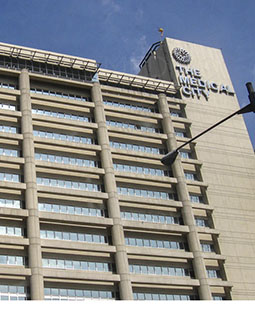
The Medical City is a private, tertiary care hospital, that is accredited by the JCI. It serves over 40,000 inpatients a year, making it one of the largest health care facilities in the Philippines.
DoctorsJBDr. Jose Bayani O.AlilingERDr. Emmanuel R.AsedilloView all 19
The hospital provides medical care to cover all fields of orthopedics including trauma surgery, joint surgery, spine surgery, hand surgery, locomotor tumor surgery, sports medicine, and rehabilitation medicine.
DoctorsLADr. Larry AcunaGMDr. Gregorio Marcelo AzoresView all 31
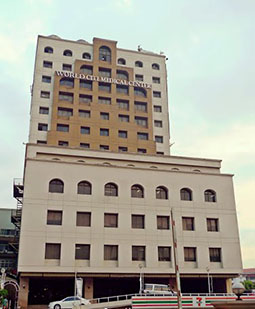
A tertiary hospital offers a wide range of medical services. It has the first and only medical hotel in the Philippines, and serves local and international patients alike.
A JCI accredited multi-specialty medical institute which has been serving patients from the Philippines and all over the world for over a century. It has over 600 inpatient beds and 1,700 affiliated medical consultants.
What is Bunion Surgery?
Bunion surgery is a surgical procedure to remove painful deformed bones known as bunions from the foot and big toe. Bunion surgery is performed when other non-surgical treatments are unsuccessful.
How is Bunion Surgery Performed?
An incision is made on the toe joint and bones.
The deformed bones and joint are then repaired using screws, pins, and plates to fix the bones in place.
The following repairs may be performed during a bunion surgery:
Shortening or elongating certain ligaments and tendons
Arthrodesis, which is the removal of the damaged portion of the joint and holding the joint together using screws, wires and plates.
Exostectomy or bunionectomy, which is the removal of the bulging bone of the foot know as the metatarsal head.
Realignment of ligaments around the joint of the big toe
Metatarsal osteotomy, which is the removal of the small bone wedge from the foot
Phalangeal osteotomy, which is the removal of the small bone wedge from the toe
Resection arthroplasty that involves reshaping of the big toe and metatarsal bones at the metatarsophalangeal joint
Lapidus procedure, which is the fusion of the metatarsal bone and mid-foot joint
Insertion of implants on joints
How to Prepare for Bunion Surgery?
The doctor should be informed about any medication that the patient is taking with or without a prescription. These may include supplements or herbs or drugs.
Certain medication that the patient is taking may be stopped two weeks before the surgery.
The doctor should be informed if the patient has any ailments or medical conditions.
The doctor should be informed if the patient has been drinking more than 2 drinks of alcohol per day.
The patient must stop smoking to ensure a quick recovery.
The patient may be required to learn some exercises from a physical therapist before the surgery. The patient may also need to learn how to use crutches.
About Bunion surgery
Key facts to plan your treatment: how long it takes, your hospital stay, anaesthesia, risks and recovery.
Duration of surgery/treatment
1 to 2 hours
Days admitted
Bunion surgery is usually done as an outpatient procedure.
Anesthesia
Local Anesthesia
Recovery
- The stitches will be removed after 1 to 3 weeks.
- Pins protruding from the foot will be taken out in 4 to 6 weeks.
- The patient may take 5 to 6 weeks to recover.
- Light activities can be resumed in 6 to 8 weeks.
- It may take a year for the foot to completely heal. This depends on how much tissue and bone is affected.
Risks
- Infection
- Bleeding
- Blood clotting
- Reappearance of the bunion
- Loss of sensation, tingling or burning sensation in the toe due the nerve damages
- Shortening of the big toe
- Stiffness at the joint of the big toe
- Swelling and pain
- Arthritis
- Avascular necrosis
- Formation of a callus on the foot soles
- Allergic reaction to medication
- Breathing difficulty
After care
- The foot should be covered and the stitches should be kept dry while the patient is showering or bathing.
- The patient may be required to wear walking casts and special shoes after the surgery for 5 to 8 weeks.
- The patient should not put weight on the foot for 6 to 8 weeks.
- The doctor will inform the patient about the amount of weight the foot should bear during recovery.
 Medical Center

 Private Hospital
 JCIPrice on request
 Private Hospital
 Private Hospital
 ISOPrice on request
 Private Hospital