Key planning information for elbow replacement in Philippines.
2–3 daysHospital stay
2 hospitalsList elbow replacement
Elbow Replacement in Philippines is priced per case at 2 hospitals. It needs 2 to 3 days in hospital. Each hospital quotes its own price for your case.
Hospitals and clinics offering Elbow Replacement in Philippines
Elbow Replacement is listed by 2 hospitals in Philippines. The order reshuffles every hour so each gets equal exposure.
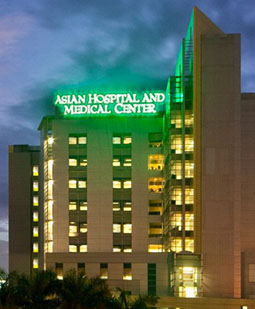
A tertiary hospital offers a wide range of medical services. It has the first and only medical hotel in the Philippines, and serves local and international patients alike.
The hospital provides medical care to cover all fields of orthopedics including trauma surgery, joint surgery, spine surgery, hand surgery, locomotor tumor surgery, sports medicine, and rehabilitation medicine.
DoctorsLADr. Larry AcunaGMDr. Gregorio Marcelo AzoresView all 31
What is Elbow Replacement Surgery Elbow replacement surgery is a surgical procedure that replaces the elbow joint bones with an artificial elbow joint. It is successful in relieving pain for patients suffering from rheumatoid arthritis, osteoporosis, and elbow injuries.
The Artificial ElbowThe prosthetic elbow joint is composed of two parts:
The Humeral Component The lower part of the humerus in the upper arm is replaced by the humeral component. It is anchored into the hollow interior of the humerus by a long stem.
The Ulnar Component The upper part of the ulna in the lower arm is replaced by the ulnar component. It is anchored into the hollow interior of the ulna by a shorter metal stem.
A hinge connects the humeral and ulnar components that are made of plastic and metal. A cemented or un-cemented prosthesis is used to keep the artificial elbow in position.
How is the Elbow Replacement Performed?
A surgical incision is made on the patient’s arm to expose the elbow joint.
The injured tissue and bones of the elbow joint are removed.
A hole is drilled into the middle of the upper and lower arm bones.
The stem ends of the artificial elbow joints are put into both the bones.
A hinge is used to attach the two stems.
The incision is closed with stitches and covered with a bandage.
A splint may be used to keep the arm stable.
How to Prepare for the Elbow Replacement?
The patient needs to undergo a physical checkup.
The doctor should be informed about any medication that the patient is taking with or without a prescription. These may include supplements or herbs or drugs.
Certain medication that the patient is taking may be stopped two weeks before the surgery.
The doctor should be informed if the patient has any ailments or medical conditions.
The doctor should be informed if the patient has been drinking more than 2 drinks of alcohol per day.
The patient may be required to meet the physical or occupational therapist to learn some exercises before the surgery.
About Elbow Replacement
Key facts to plan your treatment: how long it takes, your hospital stay, anaesthesia, risks and recovery.
Days admitted
2 to 3 days
Anesthesia
General or regional anesthesia depending on the patient
Recovery
- The patient is taken to the recovery room to be monitored until the effect of anesthesia diminishes.
- The patient may be required to use a splint in the arm to support the elbow. Ice pack may also be wrapped around the arm to ease the pain and swelling.
- The stitches are removed after 10 days.
- Swelling and pain will remain for 2 to 4 weeks and the patient will need help with daily activities for about 6 weeks.
- Pain medication will be prescribed by the doctor.
- The patient may be able to start using the arm in about 12 weeks.
- A full recovery may take approximately one year.
Risks
Risks of anesthesia include:
- Breathing difficulty
- Allergic reaction to medication
Risks of surgery include:
- Bleeding
- Blood clotting
- Infection
Additional risks include:
- Nerve injury
- Bone breakage
- Blood vessel injury
- Allergic reaction to the artificial elbow joint
- Dislocation of the artificial elbow joint
- Loosening of the artificial elbow joint in due course
After care
- The patient is taken to the recovery room to be monitored until the effect of anesthesia diminishes.
- The patient may be required to use a splint in the arm to support the elbow. Ice pack may also be wrapped around the arm to ease the pain and swelling.
- The stitches are removed after 10 days.
- Swelling and pain will remain for 2 to 4 weeks and the patient will need help with daily activities for about 6 weeks.
- Pain medication will be prescribed by the doctor.
- The patient may be able to start using the arm in about 12 weeks.
- A full recovery may take approximately one year.

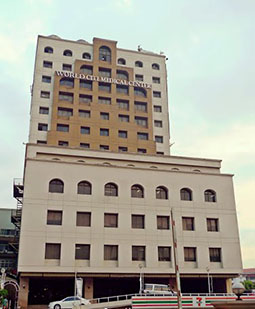 Private Hospital
 ISOPrice on request