Key planning information for prostatectomy in India.
$3,000 fromLowest listed price
3–4 hrsProcedure time
2–3 daysHospital stay
13 hospitalsList prostatectomy
Prostatectomy in India is listed from US$3,000 to US$3,500 at 13 hospitals. The operation takes 3 to 4 hours, with 2 to 3 days in hospital. Each hospital quotes its own price for your case.
Prices last updated May 2017
Cost of Prostatectomy in India
Table of prices by type of procedure, in US$. Each hospital quotes its own price for your case.
Procedure
Minimum price
Maximum price
Prostatectomy
$3,000
$3,500
Price starting from $3,000 up to $3,500 · last updated May 2017.Final prices are quoted by each hospital
Hospitals and clinics offering Prostatectomy in India
Prostatectomy is listed by 13 hospitals in India. The order reshuffles every hour so each gets equal exposure.
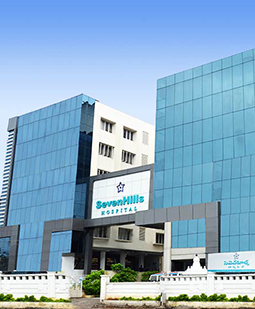
SevenHills Group of Hospitals (SHHL) has been delivering Healthcare services at the highest level, since past 25 years. SevenHills Hospital, Mumbai, is a world class integrated Healthcare Delivery System, that provides comprehensive Healthcare...
DoctorsIADr. Indoo AmbulkarCSDr. Chetan ShahView all 3
A 200-bed facility located at Gateway Center in Northwest Bangalore. The hospital opened in 2008 and provides comprehensive tertiary-level services, such as cardiac operations, orthopedics and neuroscience, as well as secondary-level medical care.
DoctorsGNDr. Govind NandakumarSGDr. Shalini GovilView all 15
Apollo Specialty Cancer Hospital is an exclusive and well established hospital for Cancer care with an Oncology team that consists of the most renowned specialists and a well trained team of medical and paramedical professionals who are exclusively trained in cancer care.
DoctorsRProf. RajasundaramDDDr. Debnarayan DuttaView all 19
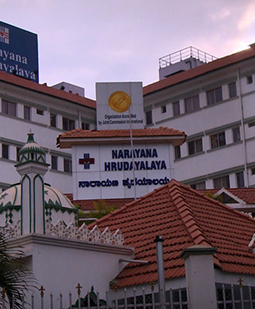
A conglomeration of hospitals in one campus, including: the Sparsh Hospital for Orthopedics & Trauma, the Mazumdar Shaw Cancer Center, the Narayana Hrudayalaya Heart Hospital, the Narayana Nethralaya Eye Hospital, as well as a full fledged multi specialty hospital.
DoctorsAPProf. Anthony PaisPNDr. Prasad NarayananView all 21
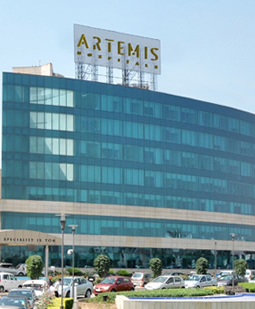
Artemis Cancer Centre is an integral part of Artemis staffed by well trained and experienced team of oncologists and paramedics, and armed with world class equipment and facilities.
DoctorsRCDr. Rakesh ChopraHGDr. Hari GoyalView all 18
PricesLaser Prostectomy $3,000 – $3,500Prostatectomy upon request
One of the largest private hospitals in Chennai, containining five specialty centres: Heart Institute, Institute for Renal Sciences, Specialty Centre for Joints, OBG and Gynecology centre and a Diabetes centre.
DoctorsBDr. BellaramineSKDr. Suresh KumarView all 3
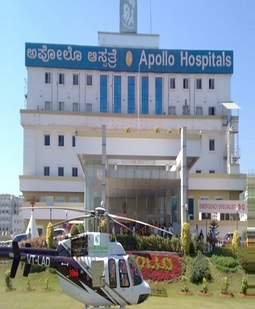
Apollo Bangalore is a modern, JCI accredited, multi-specialty hospital, capable of treating the most complex medical cases, including neurosurgy, bone marrow transplants, oncology and cardiac surgery. Apollo provides a full range of services for foreign patients.
DoctorsPPDr. P P BapsyBRDr. B.K.M. ReddyView all 6
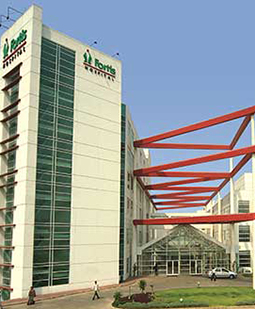
Located near Delhi, Fortis Hospital Noida is a Centre of Excellence for Orthopaedics and Neurosciences with a focus on Cardiac Sciences, Minimally Invasive Surgeries and Oncology.
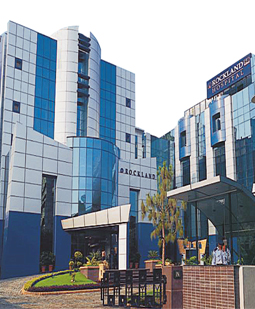
Rockland Hospital Qutab offers choice of selecting from economy rooms to most luxurious single rooms. It is well recognized and credited for its services. The hospital attracts more than 1500 international patients for their specialized medical care needs in a year.
Prostatectomy is a surgical procedure that is performed to remove a diseased prostate gland. Prostatectomy can also be done to remove an enlarged prostate gland. This is known as simple prostatectomy. When a prostatectomy is performed to treat prostate cancer, it is known as radical prostatectomy.
Prostatectomy may be performed by an open surgery method or by laparoscopy. Laparoscopic prostatectomy may be performed either manually or by using robotic approach. This type of laparoscopy is known as robot-assisted prostatectomy.
What are the different methods of Prostatectomy?
Radical Retropubic Prostatectomy
In radical retropubic prostatectomy, an incision is made in the abdomen, below the navel extending up to the pubic bone. The duration of this type of prostatectomy can take up to four hours.
Laparoscopic Radical Prostatectomy
In laparoscopic radical prostatectomy, several small incisions are made in the patient’s abdomen. A laparoscope, which is an endoscopic tube with a camera attached to it, is inserted through one of these cuts. This helps the surgeon to view the insides of the patient’s abdomen. Other surgical tools are also inserted and the surgery is performed.
Robot-Assisted Laparoscopic Prostatectomy
Occasionally, laparoscopic surgery may be performed using a robotic system. The surgeon uses a computer to move the robotic arms that performs the surgery.
Radical Perineal Prostatectomy
In radical perineal prostatectomy, an incision is made on the skin that is between the perineum, which is the scrotum, and the anus. Compilations include nerve damage and difficulty in removing lymph nodes.
How to Prepare for Prostatectomy?
The patient is physically examined to ensure that the patient is in a good condition to undergo surgery.
The patient may need to give some tests like blood and urine analysis, transrectal ultrasound, prostate biopsy, bone scan, CT scan and MRI.
The doctor should be informed about any medication that the patient is taking with or without a prescription. These may include supplements or herbs or drugs.
Certain medication that the patient is taking may be stopped two weeks before the surgery.
The doctor should be informed if the patient has any ailments or medical conditions.
The patient must stop smoking to ensure a quick recovery.
The patient may be required to take laxative medicine on the evening ahead of the surgery if the patient’s intestine needs to be cleaned.
About Prostatectomy
Key facts to plan your treatment: how long it takes, your hospital stay, anaesthesia, risks and recovery.
Duration of surgery/treatment
3 to 4 hours
Days admitted
2 to 3 days
Anesthesia
Spinal, epidural or general anesthesia
Recovery
- The dressing is frequently changed for a proper drainage.
- If drainage tubes are used, they will be removed in two days after the surgery.
- A urinary catheter will be attached for five to 14 days after the patient’s discharge.
- After the surgery, the patient’s penis and scrotum will be swollen for four to seven days.
- Pain medication may be provided, which is delivered by an epidural or an intravenous method. Oral pain medication will be prescribed after the patient is discharged.
Risks
Risks of anesthesia include:
- Breathing difficulty
- Allergic reaction to medication
Risks of any surgery include:
- Bleeding
- Blood clotting
- Infection
Risks of prostatectomy include:
- Urinary Incontinence
- Impotence
- Rectal injury
- Bowel incontinence
- Urethral stricture, in which the urinary outlet is tightened due to scar tissue
After care
- To prevent pneumonia, the patient may be required to use an incentive spirometer that helps in deep breathing.
- To prevent blood clots the patient needs to walk and do some leg exercises.
- The patient may be allowed to take liquid diet after the surgery and later solid food is allowed.
- The patient can take sponge baths before the dressings are removed.
- After the dressings are removed, the patient may start taking showers.
- The incision area should not be scrubbed while bathing.
- The patient should avoid lifting heavy objects for three weeks after the surgery.
- The patient can do some light physical exercises such as walking and jogging.
- Abdominal exercises and cycling should not be done for six weeks after the surgery.
- Once the catheter is removed, the patient can start driving.
- The catheter should be cleaned twice a day and the urine bag should be emptied frequently. The bag should be placed in a level that is lower than the patients’ bladder.
- The doctor will teach the patient how to do some exercises to strengthen the bladder muscles, which helps in managing incontinence. If the patient is not able to regain control by six months, the doctor should be consulted.
- Skin rashes may occur due to urinary incontinence. The patient needs to consult the doctor and use some skin barrier or ointments to ease the symptoms.
- The patient is required to take high amounts of water and include roughage in the diet to manage constipation.
- The patient can consult the doctor to manage impotence.
The doctor should be consulted immediately if the following symptoms are detected:
- pain while urinating
- swelling of feet or legs
Radical robotic prostatectomy
What is Radical robotic prostatectomy ? Surgical procedure that involves the removal of the prostate gland, which may or may not be associated with the removal of the lymph nodes in the pelvis) assisted by a Da Vinci robotic surgery system. This surgical procedure is indicated in patients with prostate cancer.
How is Radical robotic prostatectomy performed? How the procedure is performed: radical prostatectomy involves the removal of the prostate gland and seminal vesicles, ending with the junction (anastomosis) between the bladder and the urethra. For this, access to the abdominal and pelvic cavity is made through small incisions (8-10mm) through which the trocars and articulated arms of the robotic system are inserted. The robotic console surgeon and the assistant surgeon perform the intervention with the advantages of 3D vision, 10x magnified vision and the fine precision of movements provided by the robot.
Author: Dr. Vital Hevia Posted: 30 August 2019 at 09:04 CET Last Updated: 30 August 2019 at 09:32 CET
Duration of surgery/treatment
2.5-3.5 hours.
Days admitted
Between 2-4 days hospitalized and 7-10 days with catheter.
Days of Stay in the Country: 10-15 days.
Anesthesia
General anesthesia
Recovery
Robotic surgery offers oncological results similar to those of classical open surgery in prostate cancer. However, its main benefit lies in the excellent functional results that it allows to achieve in the hands of experienced surgeons: lower rates of urinary incontinence and erectile dysfunction, as well as a faster postoperative functional recovery.

 Private Hospital

 JCI
 ISO