Key planning information for spinal fusion in Spain.
$16,000 fromLowest listed price
4 hrsProcedure time
4–6 daysHospital stay
14 hospitalsList spinal fusion
Spinal Fusion in Spain is listed from US$16,000 to US$17,000 at 14 hospitals. The operation takes 4 hours, with 4 to 6 days in hospital. Each hospital quotes its own price for your case.
Prices last updated Nov 2018
Cost of Spinal Fusion in Spain
Table of prices by type of procedure, in US$. Each hospital quotes its own price for your case.
Procedure
Minimum price
Maximum price
Spinal Fusion
$16,000
$17,000
Price starting from $16,000 up to $17,000 · last updated Nov 2018.Final prices are quoted by each hospital
Hospitals and clinics offering Spinal Fusion in Spain
Spinal Fusion is listed by 14 hospitals in Spain. The order reshuffles every hour so each gets equal exposure.
We are working hand in hand with the University of Malaga and other international centres to develop education and training programmes in this area. This field is managed by a team belonging to the field of Neurology, Clinical Neurophysiology and Clinical Psychology.
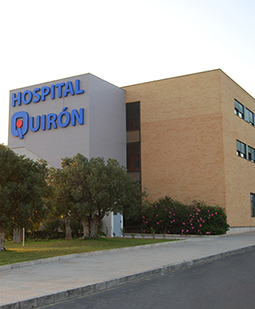
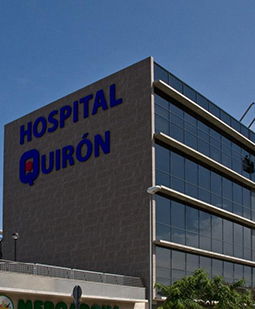
With more than 36 medical specialties, 200 physicians and surgeons of the highest level, Quironsalud Hospital Malaga is one of the most pertinent hospitals in Spain.
A neurosurgery center within Quiron Hospital Barcelona, specializing in minimally invasive surgeries on the spine. The Barcelona Spine Centre team of three neurosurgeons have over 15 years of experience in the field of neurosurgery.
DoctorsPCDr. Pablo ClavelMCDr. Marcelino CaballeroView all 3
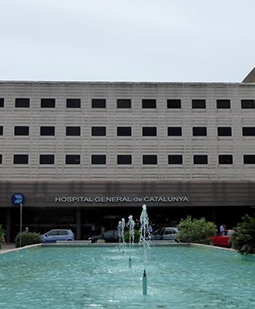
Hospital General de Catalunya provides medical services in over 25 specialties, being one of the most technologically advanced hospitals in Europe, with an excellent medical care capacity to carry out complex surgeries and medical conditions.
Quironsalud Hospital Torrevieja is an ISO-certified private hospital located in the north of Torrevieja, championing excellence in cancer treatment and management. IMTJ Best International Hospital of the world (awards 2017)
Hospital Ruber Internacional by Quirónsalud is designed as a "whole hospital". Thus, achieving maximum efficiency in the organization and development of the various medical, welfare, educational and research activities
This international hospital incorporates prestigious doctors, invests in research and development, technology and continuing education that enhances skills, in facilities, and in an increased operational efficiency in order to provide nothing but the best
An ISO certified modern private hospital, which was opened in 2006, and is part of the Quironsalud Hospital Group. This tertiary care hospital has certified medical specialties capable of treating the most complicated medical cases.
HM Hospitales is a hospital group with six private hospitals in Madrid: three general hospitals, a cardiovascular hospital, an oncological center and a women's health hospital.
The Department of Neurosurgery at the University Hospital HM Montepríncipe offers a wide spectrum of services, ranging from the simplest to the most complex neurosurgical techniques in the treatment of tumors.
What is Spinal Fusion?
Spinal Fusion is a surgical procedure to fix two vertebrae together. This permanently fuses two bones together and as a result there is no movement between these bones. Other surgical procedures such as laminectomy are usually done prior to a spinal fusion. A graft is used to join the bones permanently together. If the graft is taken from another body part, commonly from the pelvic bone, it is called an autograft. The graft may also be taken from a bone bank known as allograft. In rare cases, synthetic bone substitutes may also be used. Screws, plates or cages are used to join the vertebrae together so that the bones do not move when they are healing.
What are the Different Types of Spinal Fusion?
The different types of spinal fusion may be used in combination with one another. They are:
Posterolateral Fusion
In this procedure the bone grafts are placed between the transverse processes of the spine. The vertebrae are joined with the help of screws and wires through the pedicles of the vertebra, which is attached to a metallic rod on the sides of the vertebrae.
Interbody Fusion
In this procedure the bone grafts are placed between the vertebra. There are three types of interbody fusion:
Anterior Lumbar Interbody Fusion (ALIF), in which the surgery is performed through an anterior abdominal incision.
Posterior Lumbar Interbody Fusion (PLIF), in which the surgery is performed through a posterior incision
Transforaminal Lumber Interbody Fusion (TLIF) in which the surgery is performed through a posterior incision on one side of the spine.
How is Spinal Fusion Performed?
During spinal fusion, the vertebrae are exposed through an incision. Tissue layers above the bone are put aside. Small parts of bone are then placed beside the vertebrae. A spinal fusion using an autograft is more successful than a spinal fusion performed with an allograft. However, an autograft may cause more stress on the surgery and blood loss.
Spinal instrumentation may also be received by some patients. Rods, wires and screws are attached to the spine. This is used to keep the vertebrae in place during the fusion. Alternatively, an external brace may be applied after the spinal fusion surgery.
Once the surgery is complete, a drainage tube is placed out of the incision area to drain out fluid for some days.
How to Prepare for Spinal Fusion?
The patient should inform the doctor about any medical conditions and ailments.
The doctor should be informed about any medication that the patient is taking.
Certain medication that the patient is taking may be stopped by the doctor a couple of weeks before the surgery.
The patient should stop smoking a couple of weeks before the surgery to enable a quick recovery.
The doctor should be informed if the patient has been consuming alcohol.
About Spinal Fusion
Key facts to plan your treatment: how long it takes, your hospital stay, anaesthesia, risks and recovery.
Duration of surgery/treatment
Approximately 4 hours
Days admitted
4 to 6 days
Anesthesia
General Anesthesia
Recovery
- The drain tube is removed 24 to 72 hours after the surgery.
- Pain medication may be given in the form of pills or intravenous injections.
- The patient is taught how to move, sit, stand and walk in a proper without causing harm to the spine.
- The patient may need to be fed though an intravenous tube for 2 to 3 days.
- The patient may need to wear braces after the surgery.
- After the surgery, the patient may recover entirely or partially.
- Spine problems in future are possible for any patient after a spinal surgery.
Risks
- The risks involved in spinal fusion include:
- Infection in the vertebrae
- Injury to the spinal nerve that can cause bladder and/or bowel incontinence, pain, weakness, loss of sensation, etc
- Blood clotting
- Adverse reaction to medication and anesthesia
- Bleeding
- Breathing difficulty
- Stroke
- After a spinal fusion, the spinal column may be stressed.
After care
- The patient may need to undergo physiotherapy after some days.
- Normal activities should be avoided for several weeks after the surgery.
- Strenuous activities should be avoided for 6 to 8 months after the surgery.
- The incision area should be kept dry and clean.
- For the scar to heal, the incision area should be protected from sunburn for a year after the surgery.
 Private Hospital
 JCI

 ISO