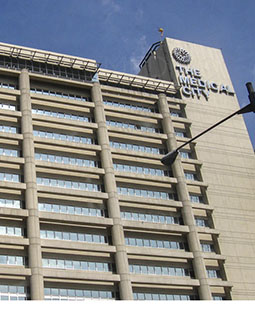
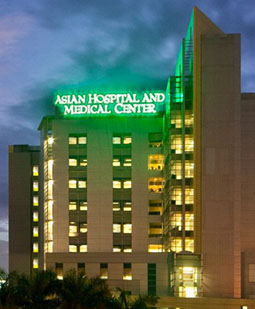
This medical centre in Manila, Philippines offers a wide array of services under the different fields and sub-specialties of the medical field. This privately owned tertiary hospital has been in operation for more than 50 years.
DoctorsABDr. Agbayani, Benigno, Jr.DLDr. De La Rosa, TammyView all 18
A JCI accredited multi-specialty medical institute which has been serving patients from the Philippines and all over the world for over a century. It has over 600 inpatient beds and 1,700 affiliated medical consultants.
The Medical City is a private, tertiary care hospital, that is accredited by the JCI. It serves over 40,000 inpatients a year, making it one of the largest health care facilities in the Philippines.
DoctorsJBDr. Jose Bayani O.AlilingERDr. Emmanuel R.AsedilloView all 19
The hospital provides medical care to cover all fields of orthopedics including trauma surgery, joint surgery, spine surgery, hand surgery, locomotor tumor surgery, sports medicine, and rehabilitation medicine.
DoctorsLADr. Larry AcunaGMDr. Gregorio Marcelo AzoresView all 31
A tertiary hospital offers a wide range of medical services. It has the first and only medical hotel in the Philippines, and serves local and international patients alike.
This is a type of surgery that is done to relieve pain and disability on the femur and knee areas of the leg. The procedure usually involves replacing parts located within this area to ease disability. The surgery may be invasive or no invasive. The type of procedure conducted will usually depend on the extent of the injury.
Diagnosis
The most common cause of knee problems is arthritis. In such a case, the doctor will conduct a blood test to determine if the person is suffering from arthritis. An X-ray may also be conducted to determine if the person has suffered any type of hairline fractures.
This will normally entail conducting a CT scan or an MRI scan. An X-Ray scan may be conducted to reveal any deformities in this area. The doctor usually follows up any tests with a careful review of the patient’s medical history. He/she will also require to examine the patient’s lifestyle. For instance, obesity may cause problems in the knees and other joints.
An arthroscopic camera may also be used to diagnose the knee. A special fluid is first inserted through a small incision to clear up the knee joint and allow easy viewing. The images the doctor sees will help determine what needs to be done.
Treatment
The treatment may involve removing torn pieces of cartilage. Torn meniscus may also be repaired or removed. Fragments of crushed bones may be removed from the knee and thigh.
The treatment may involve total replacement of the femur or the knee. This type of procedure is extreme and only occurs when no other option is available. The knee or femur is replaced with artificial substitutes. At times, if the ligaments are torn, they may be reattached to the thigh with special sutures.
About Knee & Thigh Surgery
Key facts to plan your treatment: how long it takes, your hospital stay, anaesthesia, risks and recovery.
Recovery
The recovery period for noninvasive surgery is shorter than open surgery. However, any type of operation on the knee will require that one takes some time off to recover. In addition, after surgery, one will need to attend physical therapy and use crutches for some time. Unless the operation involved repairing a ligament, one should be back on his/her feet in 6 or 8 weeks’ time. Before engaging in intensive activities again, one needs to talk to their doctor. In most cases, a knee operation means changing careers. This is the case if their work involves putting pressure on their knees. After a knee operation, one may need specialized equipment for the rest of their life. For instance, it might mean having to walk with a walking stick hence forth. This is necessary to prevent the knee from being injured again.
Risks
As with any type of operation, there is the risk of infection. In addition, complications could develop. For instance, the leg could become immobile. This would occur in case any of the nerves is injured during the operation. Another complication would be worse pain in the knee. Sometimes, the operation leads to lifelong knee pain. In such a case, one will need to go back for another surgery.
After care
Information coming soon. Request a consultation for personalized recovery guidance. Get Quote →

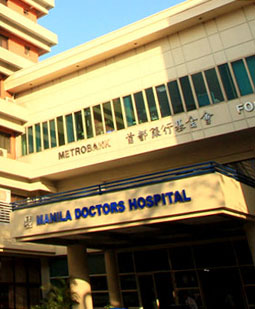 Private Hospital
 ISO
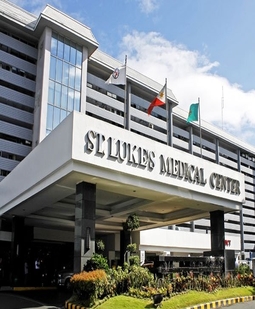
 JCI