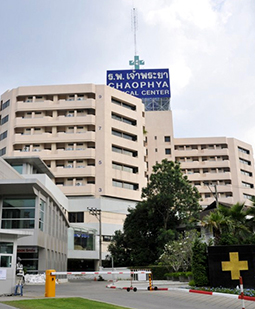
The Chaophya Hospital is a JCI accredited, tertiary private hospital in Bangkok, Thailand, which has been in operation since 1991. It has an international department which offers a comprehensive range of supporting services to foreign patients.
This is a medical procedure used to remove stones, from the ureter, kidney, bladder, or urethra (urinary tract). It is a minimally invasive outpatient procedure that is considered safe and effective. It is recommended by your doctor when you suffer a large stone that cannot be passed through urine and especially after medications.
How is it done?
While the procedure is carried out you will be under local or general anesthesia. Laser lithotripsy is done by an urologist by inserting a scope into the urinary tract- through your urethra, bladder and up the ureter- to locate the stone. A laser light is directly emitted to the stone through an optical fiber which is inserted through the working channel of the scope. The laser fragments the kidney stones and any remaining pieces are washed out through the urinary tract. To ensure the kidney drains urine well after procedure, a ureteral stent may be left in place.
When to contact your doctor
You should call your doctor if:
You have severe pain that doesn’t go away with medication.
Severe pain when you urinate.
A fever over 100°F
You are unable to urinate within 6-8 hours after the procedure.
Urine is bright red after 48 hours.
Your urine smells bad or is pink and cloudy.
You do not get better as expected.
About Laser Lithotripsy
Key facts to plan your treatment: how long it takes, your hospital stay, anaesthesia, risks and recovery.
Recovery
Diet: You may resume your normal diet after the procedure. Drink lots of fluids so your urine is pale yellow or clear like. Activity: Get plenty of rest but feel free to do regular non-strenuous activities. Avoid vigorous sports and exercise for approximately a week. Medications: Your doctor may prescribe pain medication and/or antibiotics. Take any medication you are prescribed exactly as the doctor has recommended.
Risks
Stent pain may be experienced if a stent was put in. It can rub on the inside of the bladder causing an urge to urinate. Infection and bleeding may occur. Antibiotics and hydration resolve these. Ureteral injury is the most common complication of the procedure heals with prolonged stenting. Residual stones may remain in the kidney or ureter depending on the original stone size and location. Ureteral avulsion and stricture: Scar tissue in the ureter and dissociation of ureter from the kidney may occur during the procedure. However, this complication rarely occurs.
After care
Follow up: If you have a stent placed, you will need to return and have it removed after a few weeks. If the stone was large you may need more treatments. Be sure to go to all appointments. Hospital stay: This is usually an outpatient procedure. However, if the procedure becomes lengthy or difficult, you may require staying overnight at the hospital. Others: An urge to urinate and a burning feeling when you urinate. Blood may appear in your urine for 2-3 days. Urinate through the strainer you will be given by the doctor. Save any stones for your doctor. These will help determine the cause of your stones.

 Private Hospital
 JCI
 ISO