Key planning information for percutaneous nephrolithotomy in Thailand.
2–3 hrsProcedure time
1 hospitalLists percutaneous nephrolithotomy
Percutaneous Nephrolithotomy in Thailand is priced per case at 1 hospital. The operation takes 2 to 3 hours. Each hospital quotes its own price for your case.
Hospitals and clinics offering Percutaneous Nephrolithotomy in Thailand
Percutaneous Nephrolithotomy is listed by 1 hospital in Thailand. The order reshuffles every hour so each gets equal exposure.
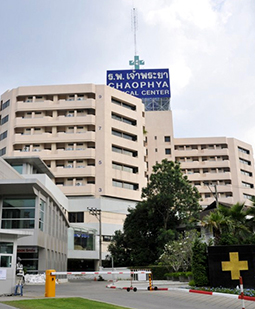
The Chaophya Hospital is a JCI accredited, tertiary private hospital in Bangkok, Thailand, which has been in operation since 1991. It has an international department which offers a comprehensive range of supporting services to foreign patients.
This is the preferred procedure for removing large kidney stones. The operative technique has had constant evolution leading to increased success rates and decreased complications, since its introduction in 1976. This invasive procedure involves entering the kidney through anincision (up to about 1cm) from the back. A nephroscope (a small fiber optic camera) and other miniature instruments are threaded in through the hole.
Advantages of the procedure
It’s the most effective technique for making sure a patient is stone-free.
It is a better option to a full-scale invasive surgery to treat the kidney
Allows for removal of large renal stones without undergoing major surgery
Has a shorter recovery period when compared to the traditional open surgery
Preparation required prior to the surger
Detailed imaging – enables the surgeon to assess the stone in fine detail hence enabling the surgeon to choose the best access point to facilitate removal of the stones.
No eating or drinking - You should have nothing to eat or drink six hours prior to the surgery as this interferes with the general anesthesia.
Mid-stream urine test - required to ensure sterility of the kidney before treatment is undertaken.
Risk factors
Even minimally invasive surgical procedures like the percutaneous nephrolithotomy carry risks. This type of surgery is of low risk if performed by a surgeon trained in the technique. The specific risks of the percutaneous nephrolithotomy are uncommon but include:
Excessive bleeding
Renal exploration
Infection of the wound
Collecting system perforation
Urinary tract sepsis
Adjacent organ injuries such as colon and bladders
Urinary leak that persists for days
Death
What happens in the operating room?
The operation is performed under a general anesthetic and lasts approximately 2 to 3 hours.
The patient is positioned lying on their stomachs for the whole duration of the surgery
An x-ray imager is used to assist in the surgery to assist in the guidance of the entry tube into the kidney that provides access to the kidney to allow visualization, manipulation, fragmentation and removal of the stones.
A nephrostomy tube which exits through the skin is left in the kidney at the end of the procedure.
About Percutaneous Nephrolithotomy
Key facts to plan your treatment: how long it takes, your hospital stay, anaesthesia, risks and recovery.
Duration of surgery/treatment
2 to 3 hours
Recovery
You will be required to rest during the recovery period that will span several weeks. Oral antibiotics will be given for a further five days to prevent infection. You should follow up with the doctor after approximately six weeks. A urinary stent will be left occasionally to ensure the urine drains correctly into the bladder
Risks
Excessive bleeding, Renal exploration, Infection of the wound, Collecting system perforation, Urinary tract sepsis, Adjacent organ injuries such as colon and bladders, Urinary leak that persists for days, Death
After care
The procedure requires general anesthesia and the patient will be hospitalized for two to three days. The length and time of surgery and recovery will depend on the position of the stone. The following are what to expect after the surgery: Hospitalized for at least two days after the procedure, A nephrostomy tube will be attached to you which will usually be removed before departing from the hospital, A urinary catheter might be attached to you for draining your bladder for the first 24 hours. You may be fitted with a ureteral stent that optimizes drainage of urine from the kidney and speeds the healing process. This is usually removed within 2-4 weeks after surgery in the hospital. Bloodstained urine lasting a week after discharge. Imaging will be performed after the surgery to ensure all the renal stones were completely removed by the surgery.
Minimal discomfort from the wound

 Private Hospital
 JCI
 ISO