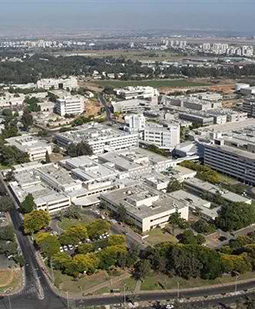
 Public Hospital
Tel Hashomer, Israel
 JCIPrice on request
The largest medical center in Israel and the Middle East, internationally renowned for it's medical excellence. Around 31,000 inpatients are treated annually.
Price
Contact for quote
Oncology care in Israel
Hospitals and medical centers in Israel which treat Mesothelioma patients.

Key planning information for mesothelioma treatment in Israel.
Mesothelioma Treatment in Israel is priced per case at 5 hospitals. Each hospital quotes its own price for your case.
Mesothelioma Treatment is listed by 5 hospitals in Israel. The order reshuffles every hour so each gets equal exposure.
Public HospitalJCIPrice on requestThe largest medical center in Israel and the Middle East, internationally renowned for it's medical excellence. Around 31,000 inpatients are treated annually.
 Public University HospitalJCIPrice on request
The Oncology Institute at Rambam Health Care Campus is a multi-disciplinary center for cancer treatment. It is certified by the European Society for Clinical Oncology (ESMO) as an integrated center for cancer treatment and support services, and is the only institute of its kind in Northern Israel.
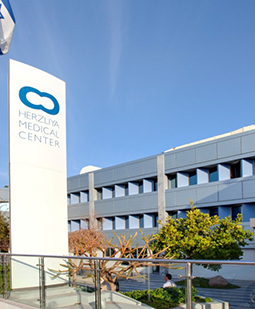 Private Hospital
A private hospital located on the shorelines of Herzliya, just off Tel Aviv, offering healthcare services to both local and foreign patients. The hospital is affiliated with over 500 Israeli physicians, many of whom hold high level positions at public hospitals.
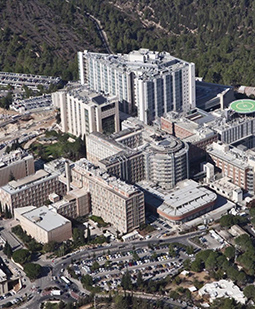 University Hospital
Hadassah medical institution includes two university hospitals in Jerusalem – on Mt. Scopus and in Ein Kerem. Both provide advanced tetriary healthcare services in all medical specialties.
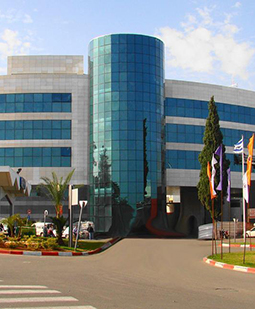 Public Hospital
 ISOPrice on request
One of the largest hospitals in Israel with 900 beds and 700 physicians. The hospital serves 1000 medical tourists annually, providing advanced medical care at the highest western standards.
Mesothelioma is treated at
Mesothelioma is cancer that affects the mesothelial cells. These are the cells that cover the outer surface of our internal body organs, forming a lining that is sometimes called the mesothelium. Mesothelium can develop in the tissues covering the abdomen and the lung.
The primary risk factor for getting mesothelioma is exposure to asbestos. Asbestos is a natural occurring mineral found in the environment and when it’s broken up it creates dust particle that when inhaled, settle in the linings of the lungs or stomach and cause irritation that leads to mesothelioma.
In order to reduce the risk of mesothelioma, one must reduce his/her exposure to asbestos. It is important for one to follow the following guidelines to limit the chance of getting mesothelioma:
If the signs and symptoms might indicate the possibility of having mesothelioma, the doctor is required to do the following tests to confirm.
When the finding are inconclusive, further tests are needed to be performed to confirm if the symptoms are truly for mesothelioma or another disease. They include:
Biopsy – involves removal of a small portion of tissue that is subjected to laboratory examination. The tissue sample will be analyzed with the aid of a microscope to determine whether the irregular tissues is mesothelioma. A biopsy is a proven way to confirm mesothelioma.
After being diagnosed with mesothelioma, the doctors will require determining the stage of cancer. Imaging test that will be performed to help determine the stage of the cancer include:
Once the extent of the mesothelioma is determined, a cancer stage will be assigned. It starts from stage 1 which is considered localized to stage 4, which is considered advanced cancer that has spread to distant areas of the body.
Mesothelioma is an aggressive disease and for most people, the cure is not possible, if it is diagnosed late when it is not possible to remove cancer through surgery. Treatment options include:
Key facts to plan your treatment: how long it takes, your hospital stay, anaesthesia, risks and recovery.
Common questions
Have a question? Get a free consultation.
Choose a hospital and send your enquiry to its international patient team. Each replies with its own price and plan.
Free consultation • No obligation