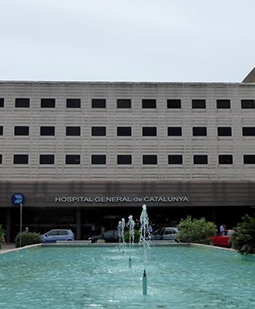
Fundació Puigvert state-of-the-art high technology equipment, including robotic surgery and minimally invasive approach, together with some of the world’s leading specialists and over 60 years of experience, allow the clinic to have served over 600.000 patients
DoctorsJPProf. Juan Palou Redorta, Prof, MD, PhDERProf. Eduard Ruiz CastañéView all 7
Urology is the medical-surgical speciality covering study, diagnosis and treatment of pathologies that affect the urinary system, suprarenal glands and retroperitoneal glands of both sexes and the male reproductive system, with no age limit.
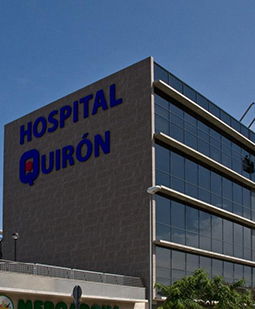
With more than 36 medical specialties, 200 physicians and surgeons of the highest level, Quironsalud Hospital Malaga is one of the most pertinent hospitals in Spain.
Sanitas Hospitales is among the foremost programs for delivering sophisticated, patient-centered care across the entire spectrum of adult and adolescent urological conditions.
This international hospital incorporates prestigious doctors, invests in research and development, technology and continuing education that enhances skills, in facilities, and in an increased operational efficiency in order to provide nothing but the best
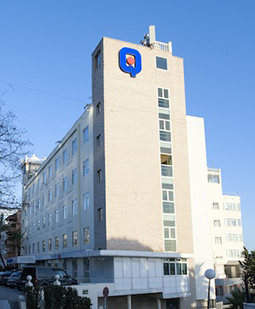
An ISO certified modern private hospital, which was opened in 2006, and is part of the Quironsalud Hospital Group. This tertiary care hospital has certified medical specialties capable of treating the most complicated medical cases.
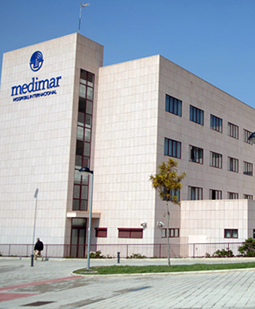
Medimar International Hospital is a tetriatry care hospital with 200 physicians, 50 resident and 150 affiliated, providing healthcare services to the residents of Alicante, as well as to over 25,000 foreign patients a year.
HM Hospitales is a hospital group with six private hospitals in Madrid: three general hospitals, a cardiovascular hospital, an oncological center and a women's health hospital.
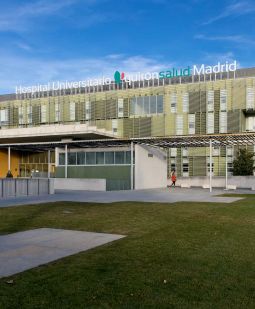
Quirón has an internationally prestigious medical staff, the largest in the sector, and is also the principal hospital network in terms of patient numbers and care facility area. The group administers 47 healthcare centers, more than 4.000 hospital beds and 8.000 doctors
The Department of Urology has the expertise to deal with Urinary tract obstruction , Stones, Prostate enlargement, infections & Male Infertility & Impotence.
Endoscopic ureterolithotomy is a surgical procedure that is done through an endoscope which is inserted through the urethra. It may be open or laparoscopic. Endoscopy is a nonsurgical procedure that uses an endoscope to examine the inside of your body. An endoscope is an instrument with a tiny camera attached to a thin long tube. Ureterolithotomy is surgery to remove a stone from the ureter.
Indications
Endoscopic ureterolithotomy is usually indicated when medical treatment is not enough for ureteral lithiasis. Surgery is recommended when there is renal damage, untreatable pain or severe obstruction or infection. In addition, the surgery is recommended when (ESWL) extracorporeal shock wave lithotripsy fails. Ureteral lithiasis is the formation of urinary stones (calculi) anywhere in the urinary system. When small crystals, often made out of calcium, form masses they are known as calculi.
Signs and symptoms that indicate a need for the procedure include:
Abdominal pain in the groin area.
Blood present in urine.
Urinary tract infection.
Obstruction of urine flow.
Increased frequency of urination
Dribbling of urine
Surgical procedure
If the calculus is too big it is fragmented by ultrasound or laser before the surgery. Endoscopic ureterolithotomy is performed by a medical doctor using a small caliber endoscope. A few small cuts will be made to your abdomen. The doctor will move the endoscope through the urethra to identify the ureter and extract the calculi through the incision made. The incision is then closed with stitches. It is performed under general anesthesia, which can be injected into a vein or inhaled. A catheter may be put in place to help drain fluids from the area while you heal. The incisions may be covered with bandages.
When to call your doctor
Urgency or inability to urinate
Chest pain
Uncontrollable pain
Pus draining from incision site
Fever and chills
Uncontrollable nausea and vomiting
Swelling at the incision site
About Endoscopic Ureterolithotomy
Key facts to plan your treatment: how long it takes, your hospital stay, anaesthesia, risks and recovery.
Recovery
This procedure is minimally invasive and has an early postoperative recovery. Exercise will be encouraged soon after your surgery; usually within 24 hours. It may take about 3 days for bowel function to return to normal and an enema may be needed. In addition, it is sometimes necessary to leave a catheter in the urinary tract until the urinary flow is back to normal.
Risks
Risks from the surgery include: Side effects of anesthesia, Excessive bleeding, Infection, Tear in the gut wall, Blood clots, Failure to remove the stones, Hernia, Stroke or heart attack, Kidney problems due to excess narrowing of the ureter, Excess scarring of incision, Problems having bowel movements, Death
After care
You may be given blood thinners to prevent blood clots. Analgesics are generously administered as needed. If an infection is proven antibiotics are given. Antibiotics are also given according to appropriate sensitivity testing. In the first two postoperative days, you will need to be well hydrated with intravenous fluid replacement.

 Private hospital
 ISOPrice on request

 JCI